
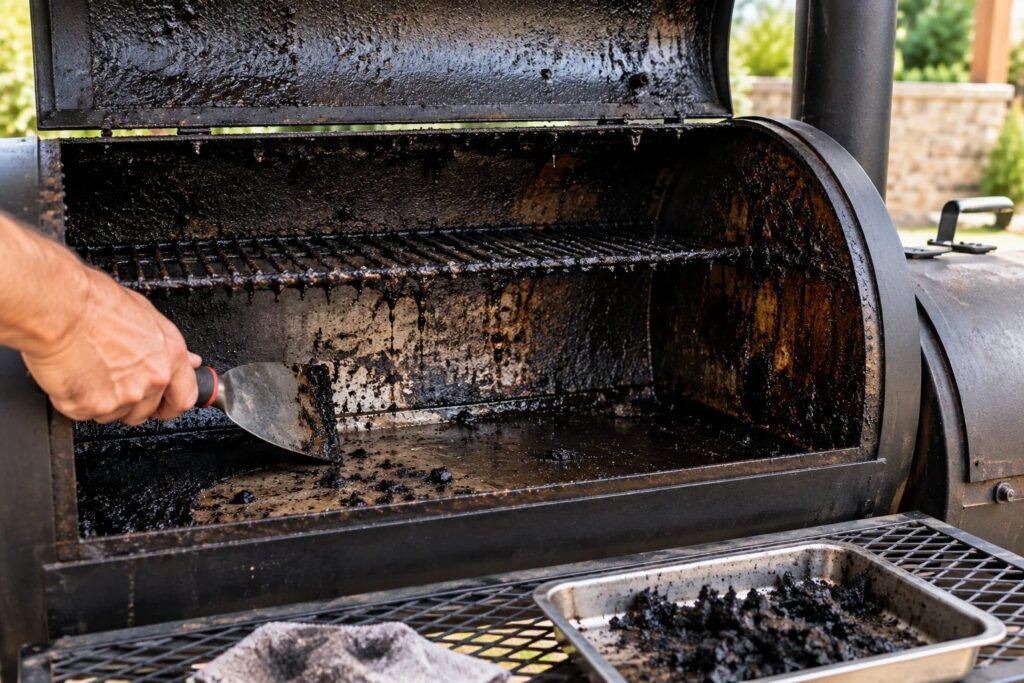
If you have ever popped the lid on a smoker that has been sitting in the garage since last season, you already know what greets you. A layer of dried grease, flaking creosote, and ash that has turned into a gray paste at the bottom of the firebox. Learning to clean a smoker properly isn't about making it look showroom new. It is about keeping your food safe, your smoke tasting clean instead of bitter, and your smoker's metal from rusting through years before it should.
The exact steps change depending on what you are running. A pellet grill's auger (the screw that feeds pellets to the fire) and firepot need attention a charcoal kettle never will, and an offset smoker's firebox collects a different kind of mess than an electric smoker's water pan. Below is the process for each type, plus a cleaning schedule you can stick to and the mistakes that quietly wreck a smoker's seasoning.
Table of Contents
Why Cleaning a Smoker Matters
Two problems show up when a smoker goes too long without cleaning. The first is creosote, the black, tar-like buildup that forms when smoke condenses on cool metal surfaces before it fully burns off. A thin, dark patina inside a smoker is normal and even helps flavor food. A thick, flaking layer is not. As Smoking-Meat.com's cleaning guide points out, it tastes bitter, it can flake off into your food, and in bad cases it is flammable enough to catch fire on its own inside the cooking chamber.
The second problem is rust. Grease and moisture sitting inside a firebox or water pan for weeks will eat through mild steel, and once rust gets a foothold on a smoker's interior, it spreads fast. A smoker that gets wiped down and dried after every cook can last a decade. One that gets left dirty and wet through a rainy week can develop pinholes in two or three seasons.
Neither problem needs a deep scrub after every cook. The right approach is light maintenance done consistently, with a deep clean two or three times a year, depending on how often you smoke.
A few signs tell you it's time to stop putting it off. Smoke that tastes sharp or bitter instead of clean usually means old creosote, not your wood choice. A door or lid that no longer seals tight is often grease buildup on the gasket, not a worn seal. And flaking black material landing on your food, rather than staying stuck to the walls, means the buildup has gone past harmless.
What You'll Need
You don't need a cabinet full of specialty cleaners to clean a smoker properly. Most of this is either already in your kitchen or costs under fifteen dollars.
- A plastic putty knife or a nylon-bristle grill brush (skip wire brushes entirely, as explained below)
- A metal ash scoop or a small shop vacuum rated for cold ash
- Dish soap and warm water
- A spray bottle of white vinegar for cutting grease
- Aluminum foil for water pans and drip trays
- Cooking oil (vegetable, canola, or another high smoke point oil) for re-seasoning
- Nitrile gloves, since creosote residue is unpleasant on bare hands
How to Clean a Charcoal Smoker
Charcoal smokers, whether it's a vertical bullet-style unit or a barrel smoker, collect ash and grease in two separate places: the charcoal basket and the water pan or drip tray underneath. Here is how to clean this type of smoker in a few short steps.
- Let the smoker cool completely. Ash can hold heat for hours longer than it looks.
- Dump the charcoal basket into a metal bucket, never a plastic trash can or paper bag. Cold-looking ash has started house fires before.
- Wipe the water pan with a paper towel to lift the bulk of the grease, then wash it with dish soap and hot water. Lining the pan with foil before your next cook will save you this step almost entirely.
- Scrape the cooking grates with a plastic putty knife or a foil ball, not a wire brush.
- Wipe the interior walls of the smoker body with a damp cloth. A light film of creosote is fine to leave. It is part of what makes the smoker season over time.
- Check the door gasket and hinges for grease buildup, and wipe them down so the door still seals tight.
How to Clean an Offset Smoker
An offset's firebox takes more of a beating than the cooking chamber does, since that is where the fire burns. This is the part of cleaning an offset smoker (a smoker with the firebox on the side) that owners tend to underestimate.
- Once the firebox is cold, sweep loose ash into an ash pan or metal bucket and remove any leftover chunks of unburned wood or charcoal.
- Pull the cooking grates and any heat deflector plates out of the main chamber. Scrape baked-on grease off the deflector plates with a putty knife, then wipe them down.
- Scrape the floor of the cooking chamber where grease and drippings collect, working from the firebox end toward the chimney so debris moves toward the exit, not deeper into the smoker.
- Wash the cooking grates separately. If they are heavily caked, the baking soda and dish soap method works just as well here as it does on a gas grill.
- Run a bottle brush or a long-handled chimney brush up through the smokestack. Creosote loves to collect right where the stack narrows.
- Wipe the exterior with a mild all-purpose cleaner, then reassemble everything once it's fully dry.
Most offset owners are better off deep cleaning the cooking chamber only four or five times a year rather than after every cook. Scrubbing the interior back to bare metal strips away the seasoning that helps food release cleanly and keeps flavor consistent.
How to Clean a Pellet Smoker
Pellet grills have more moving parts than any other smoker type, so cleaning one takes a little more care than a simple charcoal kettle.
- Unplug the grill and let it cool fully before touching anything.
- Pull the grease trap or grease bucket and scrape it out with a nylon brush, then wipe the channel underneath the drip tray where grease collects on its way down.
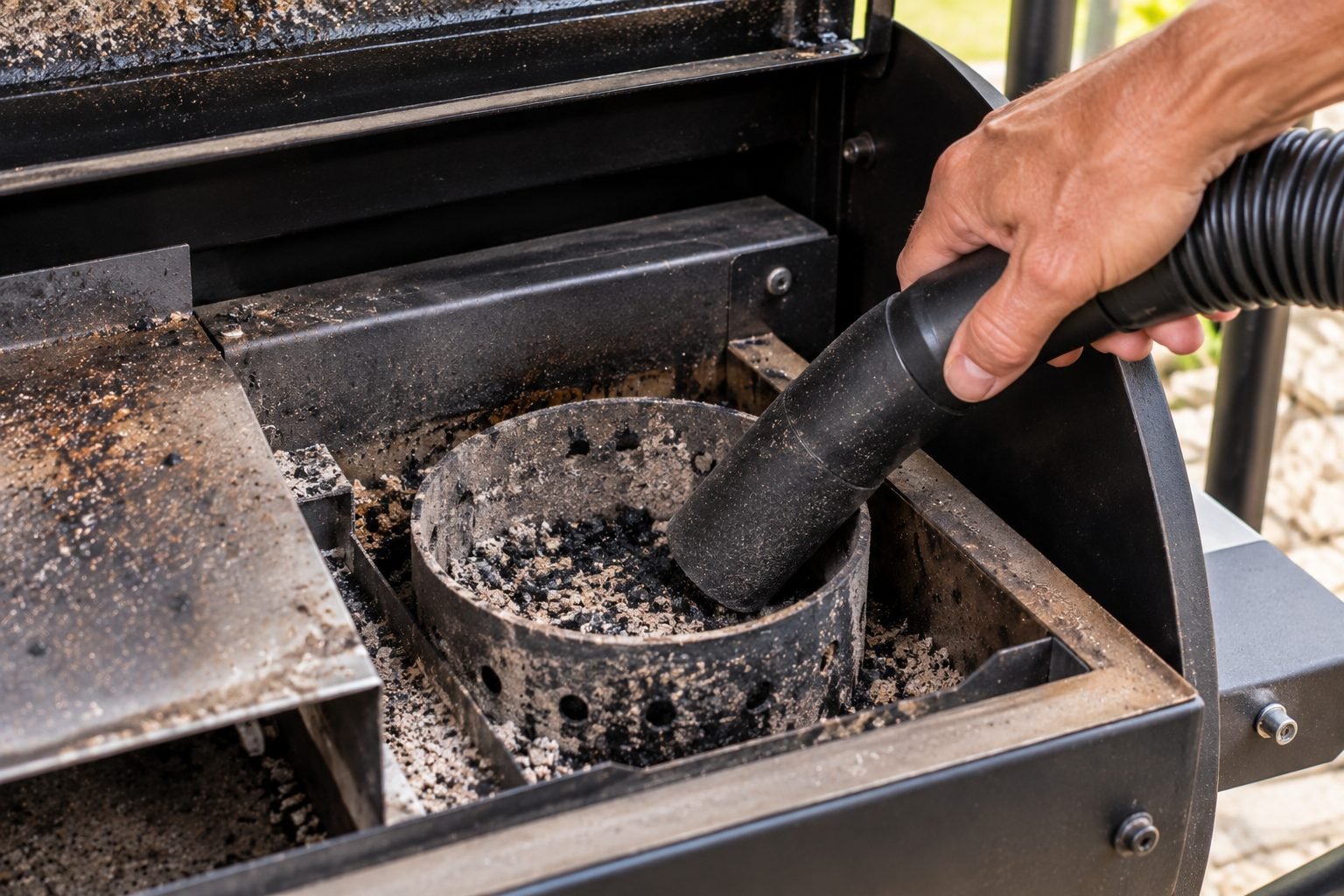
- Vacuum ash out of the firepot (the small cup where the pellets burn) with a shop vac. A small amount of leftover ash helps insulate the firepot in cold weather, so you do not need to chase every last speck.
- Check the auger tube for jammed pellets or sawdust buildup, especially if the grill has had trouble maintaining temperature lately.
- Wipe the inside walls and the underside of the lid with a scraper and a damp cloth.
- Wash the grates and drip tray with soap and water, or run them through the dishwasher if they are stainless steel.
Most manufacturers recommend a light clean every 2 to 3 cooks, or roughly every 20 to 25 hours of run time. Do a full grease trap and firepot cleaning every 3 to 6 months, depending on how often the grill sees use.
How to Clean an Electric Smoker
Electric smokers add one extra rule that the other types don't need to worry about: never let water or cleaner near the heating element or the control panel. Otherwise, cleaning a smoker like this follows the same basic order as the others, just with an extra layer of caution around anything electrical.
- Unplug the smoker completely. This is not optional, and it is the first thing to do.
- Remove the wood chip tray and water pan, then dump out the ash and water. If ash is still warm, let it sit in a metal container before throwing it out.
- Wash the racks, water pan, and chip tray by hand with warm soapy water, or in the dishwasher if they are rated for it.
- Scrape the interior walls and floor with a plastic or wood scraper, working top to bottom so debris ends up on the floor of the unit, not smeared across walls you already cleaned.
- Wipe the glass door, if the smoker has one, with a sponge and soapy water. Skip metal scrapers here since they will scratch the glass.
- Reassemble everything once it's dry, then run the smoker empty at its highest setting for 30 to 45 minutes. This drives off any leftover moisture and helps burn off light residue before your next cook.
If you ever see mold on the inside walls after long storage, set a bowl of boiling water inside the closed smoker and run it on its highest setting for about an hour. The heat and steam will loosen it enough to wipe away safely.
Cleaning Schedule: What to Do and When
Here is a schedule that is easy to keep up with.
Mistakes That Damage Your Smoker
Each of these mistakes is easy to avoid once you know what to watch for.
- Using a wire brush on cooking grates. Bristles break off and end up in food, and they have sent people to the emergency room. A plastic putty knife or a foil ball does the same job safely.
- Scrubbing the cooking chamber back to bare shiny metal every time. That seasoning layer helps with flavor and food release. Save the full strip-down for deep cleans a few times a year, not weekly.
- Storing a smoker with ash still inside. Ash pulls moisture out of the air, and wet ash sitting against steel is one of the fastest ways to start rust.
- Cleaning an electric smoker while it's still plugged in. Always disconnect power first.
- Ignoring the grease trap on a pellet grill until it overflows. A clogged or overflowing trap is a fire risk, not just a mess.
- Hosing down the outside with high-pressure water. It can force water into vents, controllers, or the auger motor on a pellet grill.
How to Re-Season After a Deep Clean
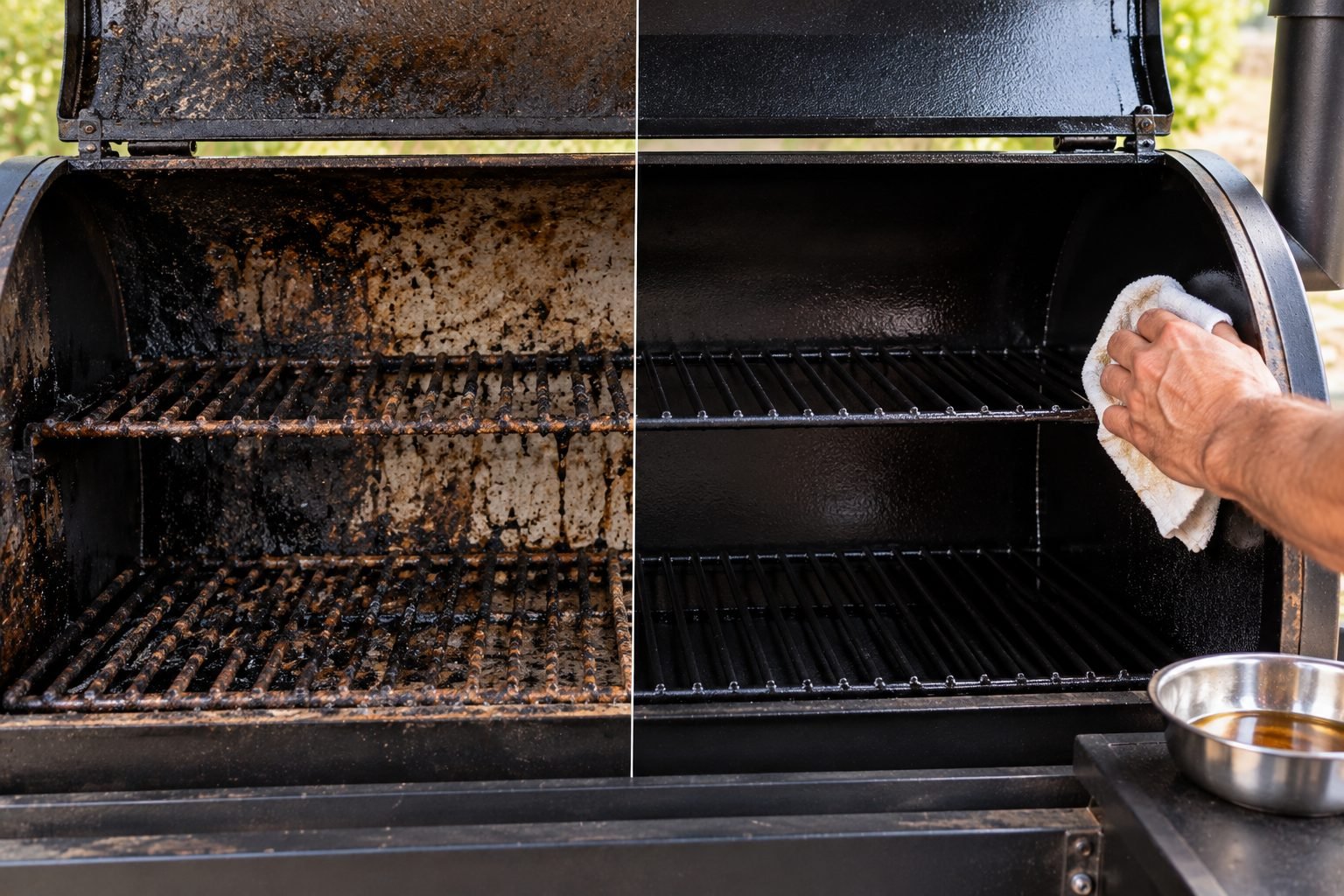
Any time you scrub a smoker back close to bare metal, give it a quick re-season before the next cook. This step is not optional. Wipe or spray a light, even coat of cooking oil across the interior walls and grates, then run the smoker empty at its highest safe temperature for about 30 minutes to an hour. The heat bakes the oil into a thin protective layer that helps prevent rust and gives food a better surface to stick to than raw metal.
Frequently Asked Questions
Do I need to clean my smoker after every single cook?
No. A quick wipe of the grates and door gasket after each cook is enough day-to-day. A deep clean, where you scrape the chamber, only needs to happen 3 to 5 times a year. On a pellet grill, also empty the grease trap every 2 to 3 cooks.
Can I use a wire brush to clean my smoker's grates?
It's not a good idea. Wire bristles break off more often than people expect, and they can end up stuck in food. A plastic putty knife, a foil ball, or a nylon grill brush gets the same result without the risk.
Is it okay to leave ash in my smoker between cooks?
For a day or two, leaving cooled ash inside is fine. For longer storage, it should always come out. Ash draws moisture from the air, and damp ash sitting against bare steel is one of the fastest ways to start rust.
How often should I clean a pellet smoker's grease trap?
Most manufacturers recommend checking it every 2 to 3 cooks and doing a full clean every 3 to 6 months. A trap that overflows is a fire hazard, not just a maintenance issue.
Do I need to re-season my smoker after cleaning it?
Yes, if you scrubbed it back close to bare metal. A light coat of cooking oil followed by 30 minutes to an hour running empty at high heat rebuilds the protective layer that keeps food from sticking and steel from rusting.
What is the fastest way to clean a smoker between cooks?
A quick wipe of the grates with a plastic scraper or foil ball, a wipe of the door gasket, and dumping any cooled ash covers most of it in under five minutes. Save the full scrub for the scheduled deep clean instead of trying to do it all every time.
Summary
Cleaning your smoker the right way for its type is the difference between a smoker that lasts a decade and one that rusts through in two or three seasons. Keep the daily maintenance light, save the deep clean for a few times a year, and skip the wire brush no matter how tempting it looks. If your grates are the one part giving you trouble, the grill grate cleaning methods here cover that in more depth. If you're shopping for a new pellet smoker that's easier to keep clean in the first place, that guide breaks down which models make grease trap access simple versus which ones bury it under half the cabinet.