
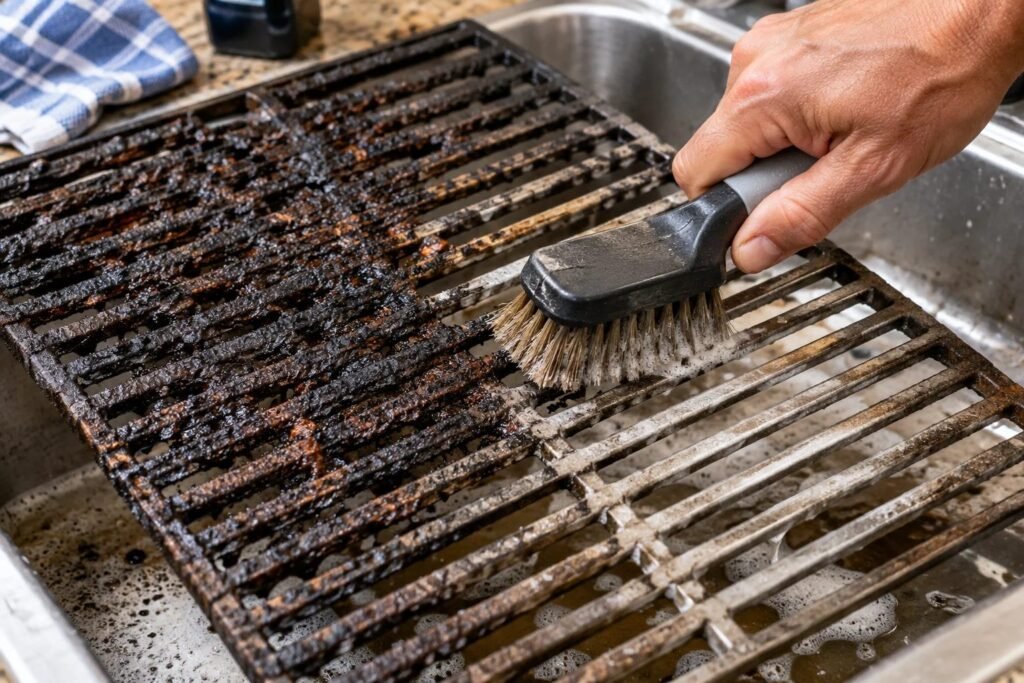
If you are trying to figure out how to clean grill grates without stripping the seasoning off cast iron or scratching a stainless steel finish, the right method depends on what is stuck to the metal. Light everyday grease, months of baked-on carbon, and full rust each call for a different approach, and using the wrong one usually just means more scrubbing for a worse result.
We compared five ways to clean grill grates, from a five-minute foil scrape to an overnight soak, ranked by how much grime each one removes versus how much work it takes. Below is what to use for everyday buildup, what changes if your grates are cast iron versus stainless steel, and the step-by-step process for getting rust off grates that got neglected over the winter.
Table of Contents
What Is Stuck to Your Grates
Before deciding how to clean grill grates, it helps to know what you are removing. Three different things build up on grates, and they do not respond to the same treatment.
- Fresh grease and food residue, the sticky layer left after a single cook. This comes off with heat and a brush in under a minute if you catch it while the grates are still warm.
- Baked-on carbon, weeks or months of grease that has polymerized into a hard, black, flaky coating. This is what most people mean when they say their grates look ruined, and it needs a soak or a chemical assist, not just scrubbing.
- Rust, which only shows up on bare cast iron or steel that lost its seasoning or oil layer, usually from being left outside uncovered or wet. Rust needs its own process, covered further down.
Trying to scrub baked-on carbon dry with a wire brush is the single biggest reason people think their grates are unsalvageable. Given a few minutes of soak time first, the same brush does the job in a fraction of the effort.
Method 1: Baking Soda and Dish Soap Paste (Best Overall)
This is the method to reach for first for baked-on grease, and it uses two things almost every kitchen already has. It is also the closest match to the winning method in The Kitchn's side-by-side test of five cleaning methods.
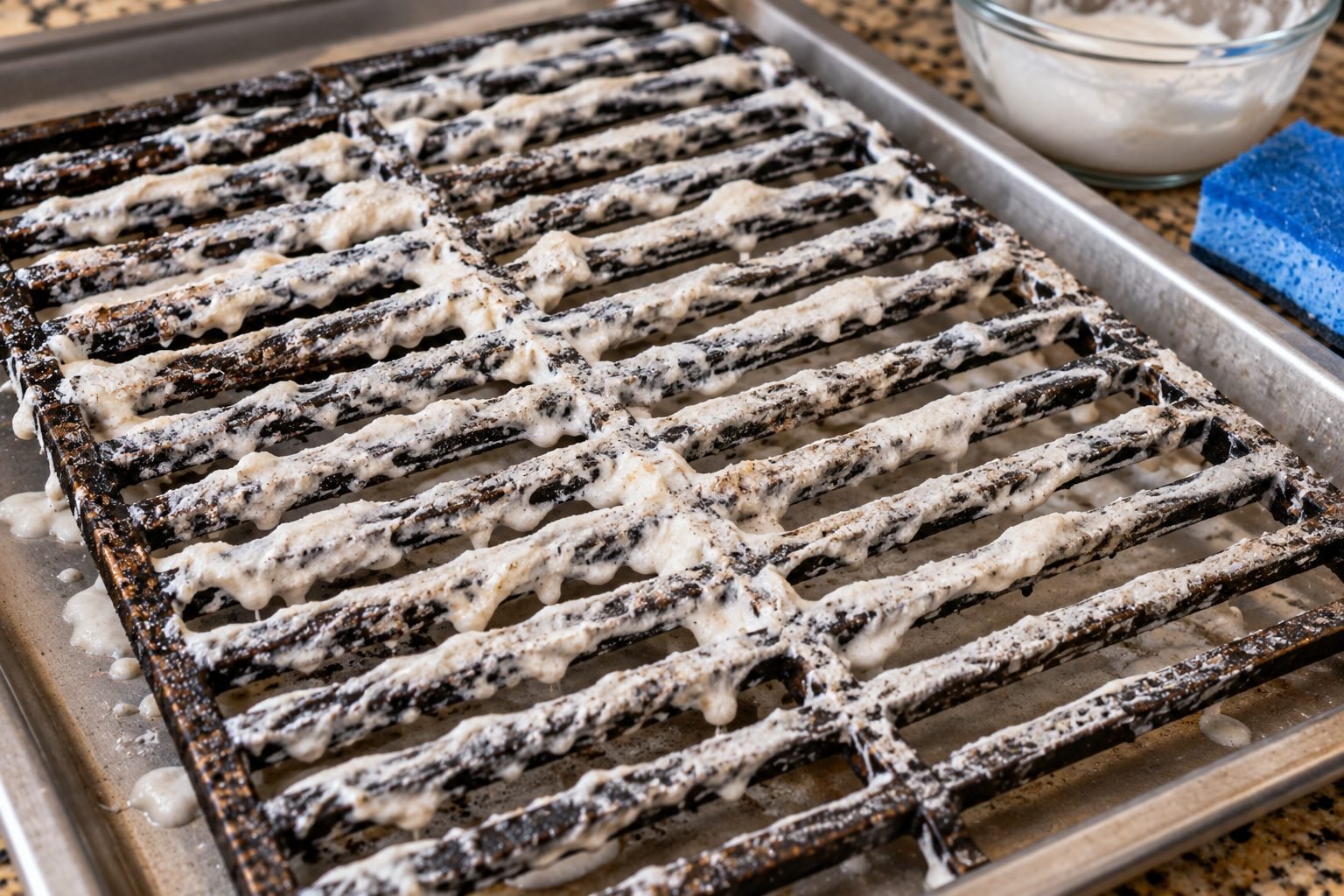
- Remove the cooled grates and lay them in a sink, tub, or large tray.
- Mix baking soda and a grease-cutting dish soap into a thick paste, roughly 3 parts baking soda to 1 part soap.
- Spread the paste over both sides of the grates and let it sit for at least 30 minutes. For heavy buildup, an hour does noticeably better work.
- Scrub with a stiff brush or non-scratch scouring pad, working with the grate lines rather than across them.
- Rinse thoroughly and dry completely before putting the grates back on the grill, since leftover moisture is how rust starts.
The baking soda acts as a mild abrasive while the soap breaks down grease, so it lifts baked-on carbon without the harsh fumes of an oven cleaner. It is slower than a spray-on degreaser, but it is the best balance of results and safety for a grate you are about to cook on again.
Method 2: Vinegar and Baking Soda Overnight Soak
This is the better choice if your grates need more than a paste can handle, or if you would rather let the soak do the work overnight instead of scrubbing right away.
- Put the grates in a large trash bag or your sink if it is big enough to submerge them.
- Pour in about 2 cups of white vinegar and 1 cup of baking soda. It will fizz, which is normal and part of what loosens the carbon layer.
- Seal the bag and let it sit overnight, or a minimum of several hours for lighter buildup.
- Scrub with a brush the next day. Most of the carbon should wipe or brush away with much less effort than starting dry.
- Rinse and dry fully.
The tradeoff with this method is time, not effort. It needs advance planning since you are not grilling on it that same night, but it is one of the most effective approaches for grates that have gone untouched for a full season.
Method 3: Onion and Salt Scrub (Fastest Mid-Cook Fix)
This is the fastest option, and it is meant for maintenance between cooks rather than restoring badly neglected grates.
- Heat the grill so the grates are hot, then brush off loose debris first.
- Cut a large onion in half and skewer it on a long-handled fork.
- Rub the cut side firmly over the hot grates. The onion's natural acidity and moisture help lift light residue, and the salt (sprinkled on first, or rubbed onto the onion) adds mild abrasion.
- Wipe the grates down with a cloth or paper towel once they have cooled slightly.
This will not touch baked-on carbon or rust, so treat it as upkeep between deeper cleans, not as a fix for grates that have already built up a heavy coating.
Method 4: Store-Bought Degreaser or Oven Cleaner
For the heaviest, most stubborn buildup, a commercial degreaser or oven cleaner cuts through grease faster than any pantry-ingredient method.
- Work outside or somewhere well ventilated, since these products have strong fumes.
- Spray the cooled grates thoroughly and, for oven cleaner specifically, seal them in a large trash bag to keep the product from drying out.
- Let it sit for the time the label recommends, often 30 to 45 minutes.
- Scrub, then rinse multiple times to make sure no chemical residue is left, since this is a surface you cook food on directly.
- Dry completely before reuse.
This is the most effective method for ruined grates, but it is also the messiest and the least forgiving if you skip the rinse step. Use it as a last resort rather than a routine choice, and never on grates you plan to cook on the same day.
Method 5: Foil Ball or Grill Stone (Light Maintenance Only)
Crumpling a ball of aluminum foil and scraping it across hot grates, or running a pumice-style grill stone over them, is the method most people already know. It is useful, just not for what most people use it for.
It works well on loose, freshly cooked-on debris while the grates are still hot, using steam from a light water spray to help lift residue. It does very little against baked-on carbon, and pressing too hard with a grill stone can wear down softer porcelain-coated grates over time. Use it as your after-every-cook habit, not as a fix for grates that have already built up a heavy coating.
How to Clean Grill Grates: The 5 Methods Compared
Here is how the five stack up on effort, time, and what they are good for.
Cleaning Grates by Material: Cast Iron, Stainless, Porcelain, and Cast Aluminum
The methods above work across materials, but a few adjustments matter depending on what your grates are made of.
- Cast iron is the most forgiving of aggressive scrubbing and chemical cleaners, but it needs a thin coat of cooking oil after every clean or it will rust within days. Never let bare cast iron air dry on its own.
- Porcelain-coated grates are more delicate. Skip wire brushes and grill stones, since both can chip the enamel coating and expose the metal underneath to rust. A nylon brush or the baking soda paste method is the safer choice.
- Stainless steel handles the vinegar soak and dish soap paste well, but scrub in the direction of the grain rather than across it to avoid visible scratch marks.
- Cast aluminum is lightweight and rust-proof, but it can pit or discolor with harsh chemical cleaners. Stick to the baking soda paste or a mild dish soap and warm water for this material.
How to Remove Rust From Cast Iron Grates
Rust looks worse than it usually is on cast iron, and in most cases the grates are still fully usable once it is removed and the surface is re-seasoned.
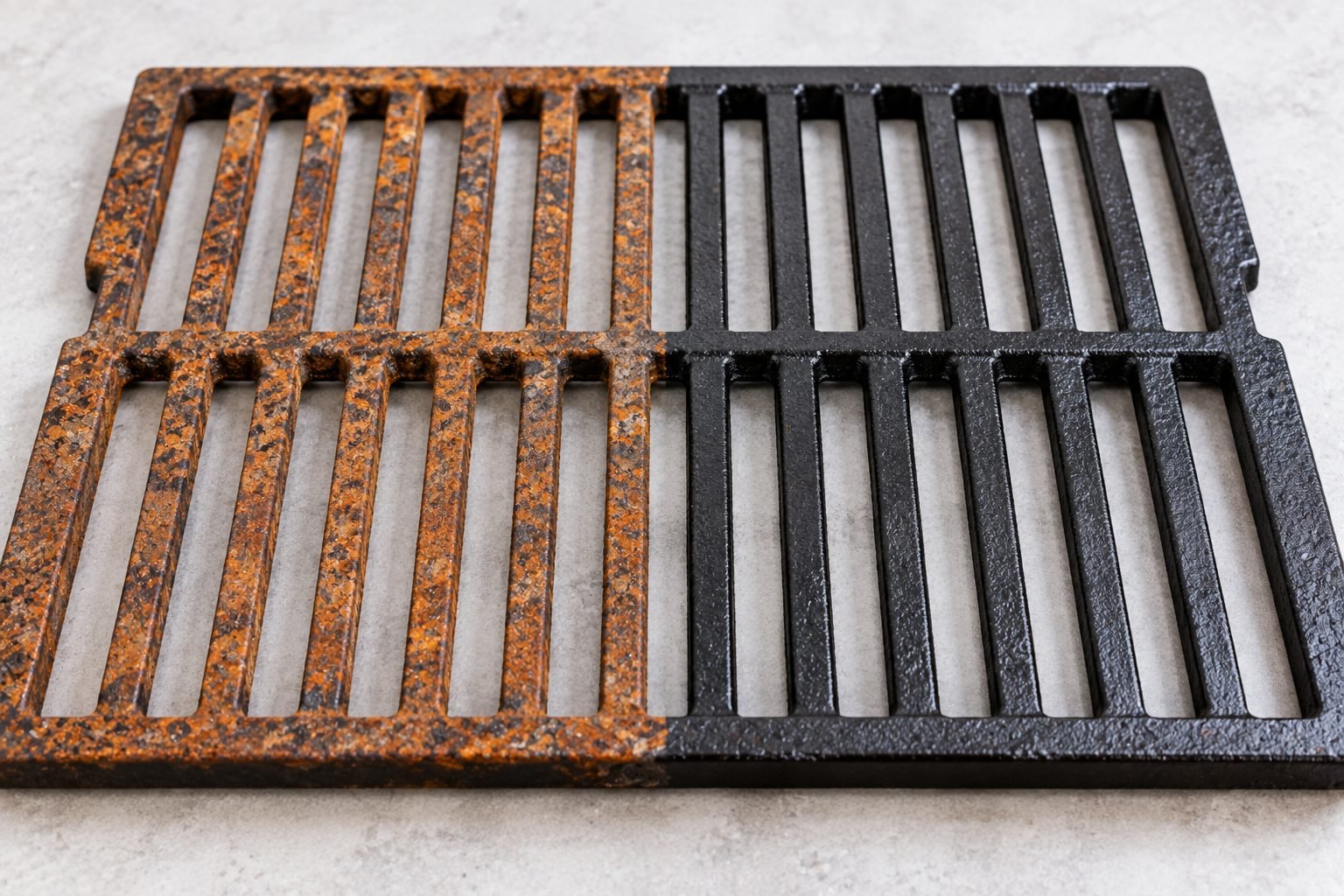
- Wash the grates first with warm, soapy water and a stiff brush to clear loose debris.
- Combine a bottle of white vinegar with about a cup of baking soda and soak the rusted areas for one hour up to overnight, depending on how bad the rust is. This softens it enough to scrub off.
- For rust that will not budge, a well-ventilated application of oven cleaner, sealed in a bag for the label's recommended time, handles what the vinegar soak could not.
- Dry the grates completely, ideally with a short stint in a low oven, since any trapped moisture invites the rust right back.
- Re-season by heating the grill to 350 to 400°F and applying thin coats of vegetable or canola oil every 20 to 30 minutes until the surface turns dark and slightly glossy.
Cast iron can take this kind of aggressive treatment without damage, which is not true of porcelain-coated or stainless grates. If rust shows up on either of those materials, it usually means the coating has already failed in that spot, and a full at-home fix is less reliable.
Mistakes That Damage Your Grates
- Scrubbing dry, baked-on carbon with a wire brush. Without a soak first, this takes far more effort and can bend or snap wire bristles off into the grates.
- Putting grates away wet. This is the single most common cause of rust on cast iron and bare steel grates.
- Using a metal wire brush on porcelain-coated grates. It chips the coating, and once that happens, rust starts at the exposed spot even if the rest of the grate is fine.
- Skipping the oil coat on cast iron after cleaning. A clean, bare grate rusts faster than a dirty, seasoned one.
- Rinsing chemical cleaners only once. Any leftover residue from a degreaser or oven cleaner ends up on the next thing you cook.
How Often You Should Clean Grill Grates
Cleaning on a regular schedule prevents most buildup from becoming a problem. A quick brush or foil scrape after every cook, while the grates are still warm, handles the rest. Beyond that, plan on a deeper clean with Method 1 or 2 roughly once a month during regular grilling season, and always before storing the grill for winter. Grates that only get the light after-cook treatment and never a full soak are the ones that end up needing an oven cleaner or a rust-removal session a season later.
Frequently Asked Questions
What is the fastest way to clean grill grates?
For light, fresh residue right after cooking, a crumpled ball of aluminum foil or a grill stone scraped over hot grates works in under a minute. For heavy baked-on buildup, the baking soda and dish soap paste is the fastest method that gets the grates clean, usually 30 to 60 minutes including soak time.
Can I use vinegar and baking soda to clean grill grates?
Yes. Combining about 2 cups of vinegar with 1 cup of baking soda in a sealed bag and soaking the grates overnight is one of the more effective ways to break down heavy, baked-on carbon without harsh chemicals. It does take longer than a paste you scrub right away.
Is it safe to use oven cleaner on grill grates?
Yes, as long as you work in a well-ventilated area, follow the label's soak time, and rinse the grates thoroughly multiple times afterward. Since this is a surface you cook food on directly, any leftover chemical residue is the main risk, not the cleaner itself.
How do you get rust off grill grates?
Soak the rusted areas in a vinegar and baking soda mixture for one hour up to overnight to loosen the rust, scrub it off, dry the grates completely, and then re-season cast iron with thin coats of oil. Porcelain-coated or stainless grates that develop rust usually have a failed coating at that spot, which a soak alone will not fully fix.
Should you clean grill grates while they are hot or cold?
Hot, for quick maintenance methods like a foil ball, grill stone, or onion scrub, since the heat helps lift fresh residue. For a deeper clean using a paste, soak, or chemical degreaser, let the grates cool first so you are not handling hot metal while scrubbing.
Summary
For most people, the baking soda and dish soap paste is the best everyday method, since it clears baked-on grease without harsh chemicals. Save the vinegar soak for grates that need more time than effort, keep the oven cleaner in reserve for neglected grates, and treat the foil ball or onion scrub as after-every-cook habits rather than a full cleaning. If you are outfitting or replacing a smoker this season, our best charcoal smokers and best offset smokers guides cover the grates and maintenance needs of each type in more depth.