
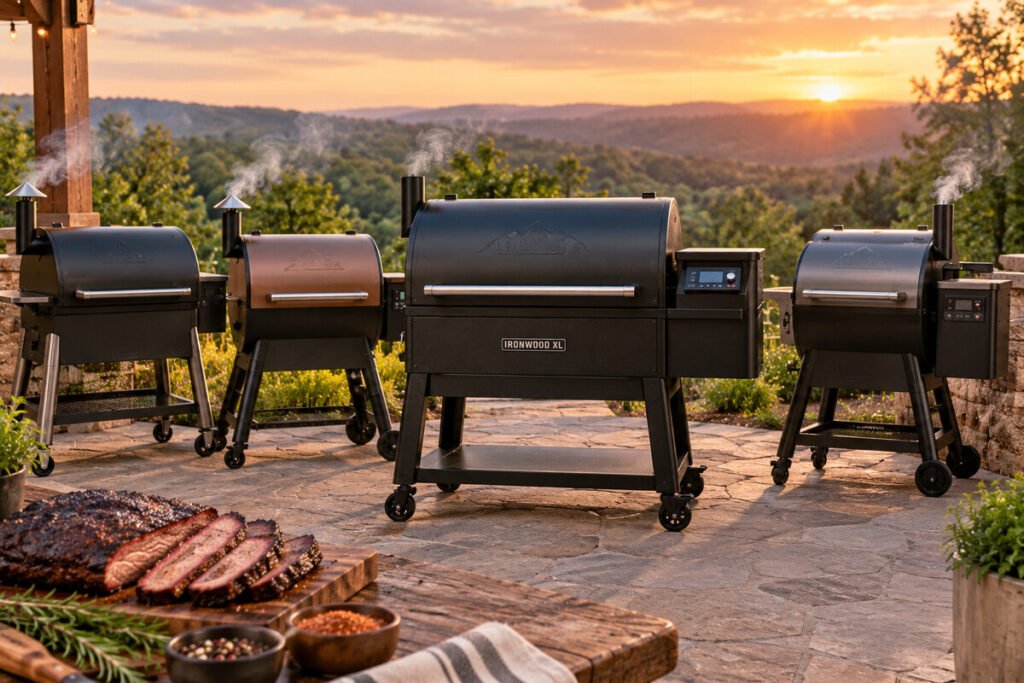
A pellet smoker is the closest thing to a "set it and forget it" wood-fired cook you can buy. Load the hopper, punch in a temperature, and the auger (the screw that feeds pellets to the fire) feeds pellets into the firepot automatically to hold that number for hours. That convenience is exactly why pellet grills took over so much backyard real estate over the last decade. But it also means the differences between models come down to details you won't notice until you're three cooks in: how well the controller holds temperature in wind, how much smoke flavor you get at 225°F versus 350°F, and whether the hopper runs dry halfway through an overnight brisket.
We compared five pellet smokers currently sold by their manufacturers or major retailers, spanning a $600 value pick to a $2,000 flagship. None of these were tested side by side in a single cook-off. Specs below come from each brand's own product pages, and anywhere a number wasn't published outright, we've said so rather than guessing.
Table of Contents
Comparison: 5 Pellet Smokers at a Glance
Prices shift with sales and retailer, so treat the figures above as ballpark rather than a quote you can hold anyone to. Weber in particular tends to run its SmokeFire line at steep discounts through third-party retailers even though the list price (MSRP) is close to $1,500.
How We Picked These
We looked for five things: an accurate published temperature range, a hopper big enough to survive an unattended overnight cook, a controller that holds temperature (PID control rather than an old-school on/off cycle), accurate cooking area rather than a manufacturer's generous rounding, and a price point that made sense for what you're getting. We also wanted a spread across budgets, since "best pellet smoker" means something different to someone doing weekend ribs than to someone smoking three briskets for a family reunion.
None of these five were run through a side-by-side test on the same day with the same brisket. Specs are pulled straight from each manufacturer's own product page or, where a brand didn't publish an exact figure, a major retailer's listing. Where we couldn't confirm a number at all, we've said so instead of estimating.
Traeger Ironwood XL
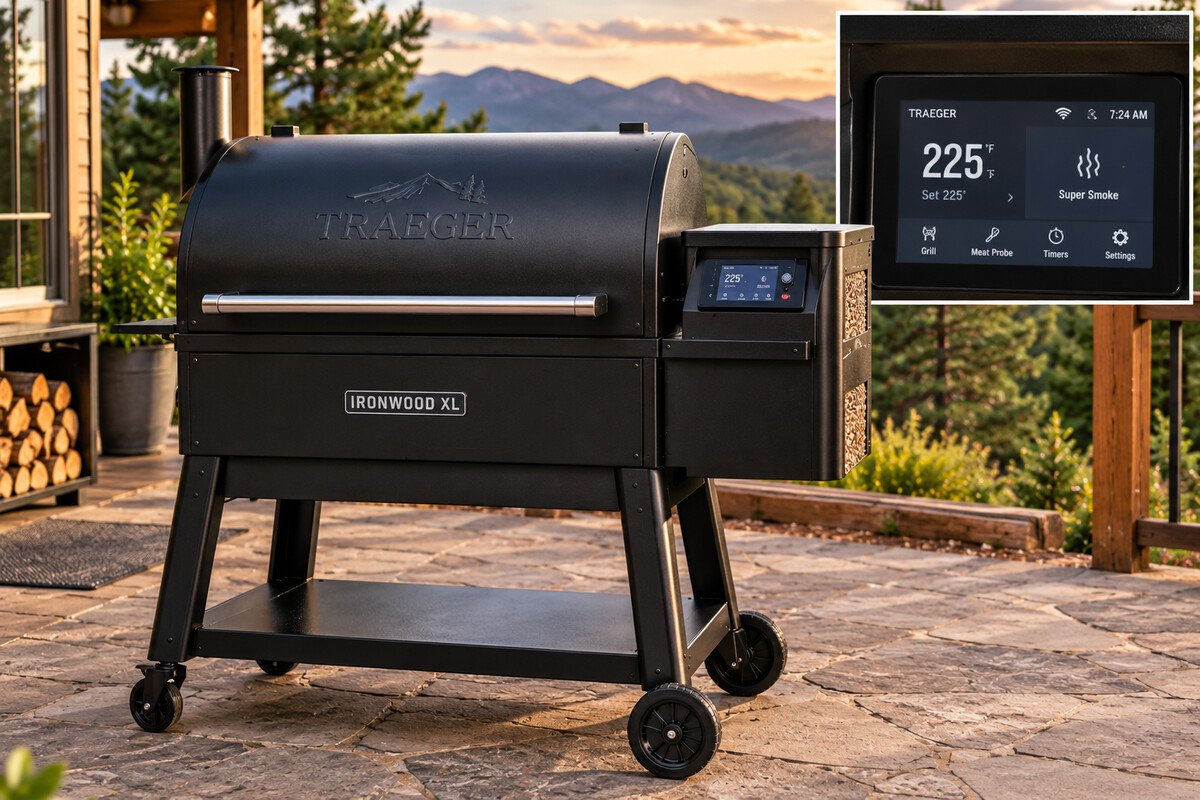
Traeger basically created the modern pellet grill category, and the Ironwood XL is where that two-decade head start shows up most. It runs 924 square inches across two tiers, holds 22 pounds of pellets, and covers a useful range from 165°F all the way to 500°F, so it's just as much a griller as a smoker. The WiFIRE app connection lets you check and adjust temperature from your phone, and Traeger's Smart Combustion tech is built to compensate automatically for outside temperature and wind rather than making you babysit the dial.
The dual-wall insulated body is the detail that matters most in practice: it's the difference between a smoker that holds 225°F steady in a 30°F wind and one that struggles. Traeger backs it with a 10-year warranty, which is unusually long for this category and says something about how confident they are in the build.
At roughly $2,000, this is the most expensive smoker on this list by a wide margin. You're paying for polish and reliability, not a fundamentally different cooking result than a well-run $600 unit will get you on a calm day. If budget is a constraint, skip to the Pit Boss below. If you want the smoothest possible experience and plan to keep the grill for a decade, this is the one to buy.
Weber SmokeFire EX6
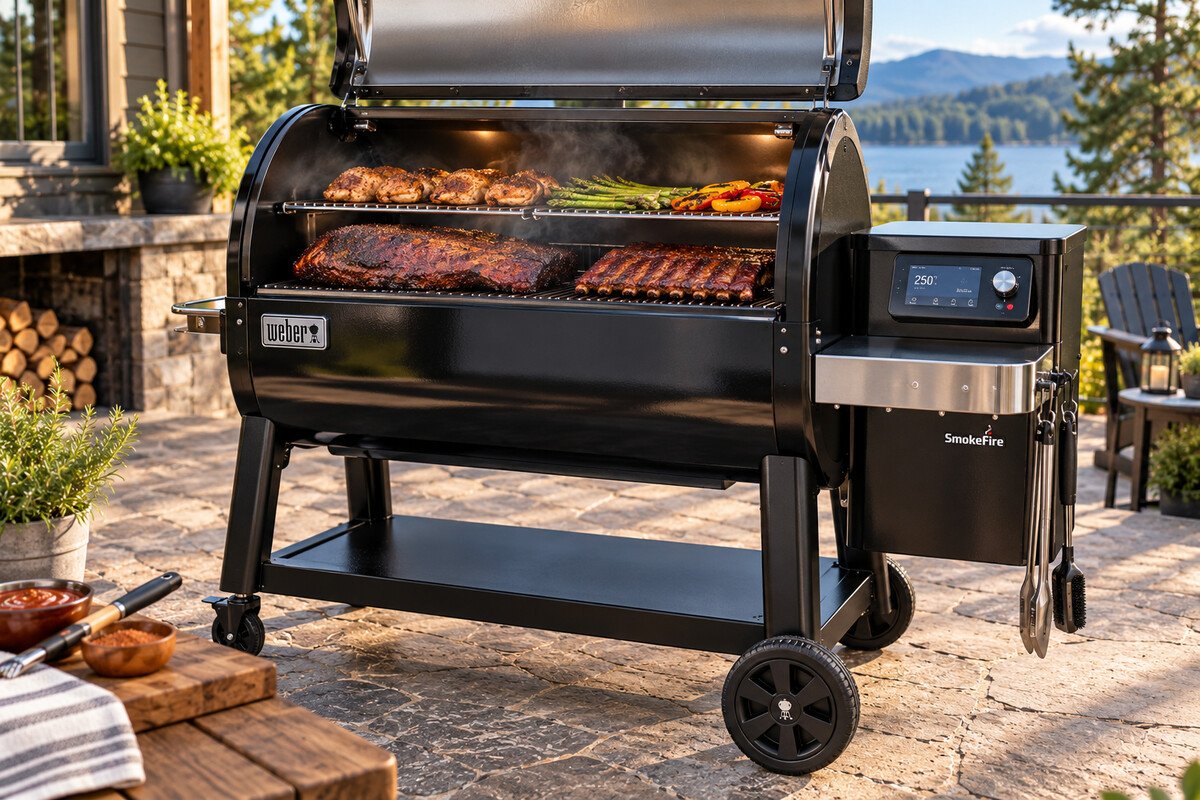
Weber's second-generation SmokeFire fixed most of the complaints that dogged the first version, and the EX6 is now a true hybrid grill-smoker rather than a smoker that happens to also grill. It tops out at 600°F, a full 100°F higher than every other model here, which means it can sear a steak instead of just warming it through. The 1,008 square inches of total cooking space is the largest on this list, split across a 648-square-inch main grate and a 360-square-inch second tier.
The redesigned auger motor (it feeds pellets to the fire and now runs on direct current) was Weber's fix for the jamming problems that plagued early SmokeFire units, and it's reportedly held up well since the update. Weber Connect walks you through a cook step by step in the app, which helps anyone still building confidence with a new grill.
Listed MSRP sits around $1,499, but this is the one model here that's worth shopping around for. Retailers regularly discount the SmokeFire line well below that number, sometimes by half, so check current pricing before assuming it's out of budget. If searing steaks and burgers matters as much to you as low-and-slow, the higher ceiling here is the main differentiator.
Camp Chef Woodwind Pro 24
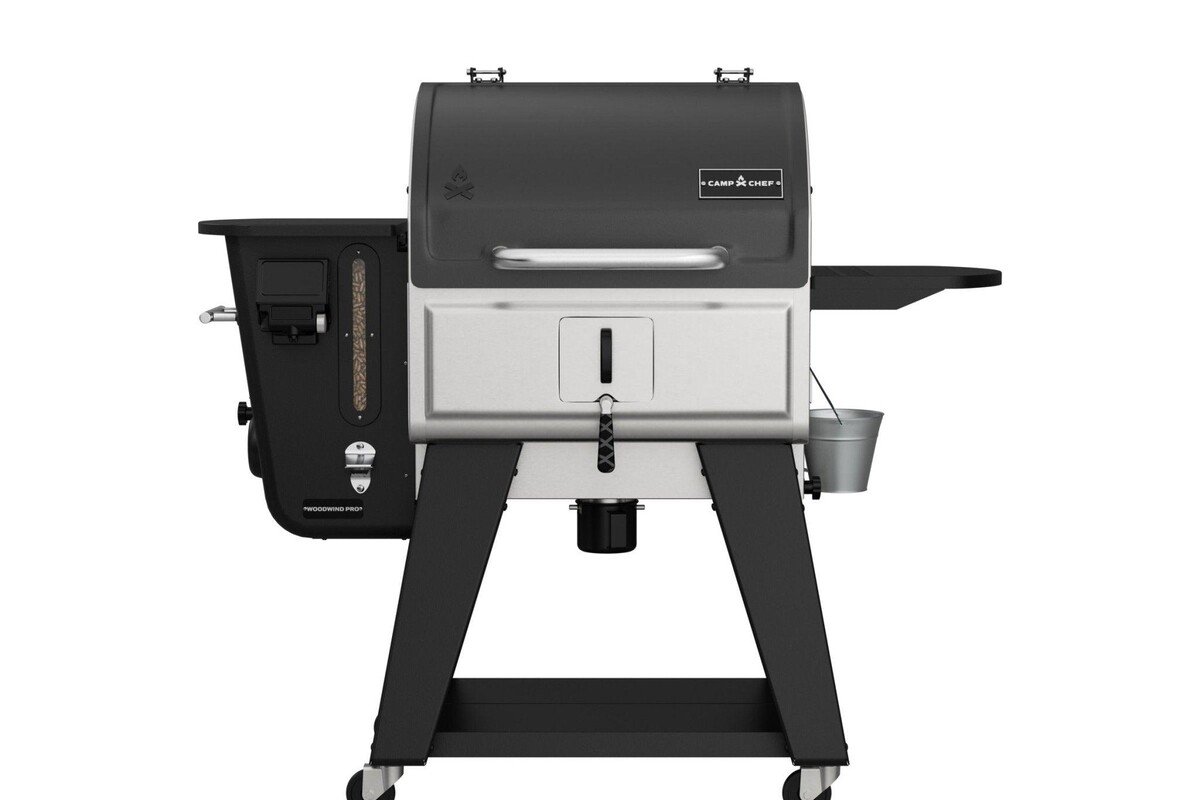
The Woodwind Pro's standout feature is its smoke box, a separate chamber that lets you burn wood chunks, chips, or even charcoal alongside the pellet hopper, layering in flavor you can't get from pellets alone. That's a different approach from the other four grills on this list, all of which are pellet-only. Camp Chef's "Down & Out" ventilation design pulls smoke down and around the food before venting it, which the brand says produces more even coverage than a simple top-vent design.
Cooking area comes to 811 square inches split across a 429-square-inch main grate and a 382-square-inch second tier, with a 22-pound hopper and WiFi control through the Camp Chef Connect app. The interior uses 430 stainless steel with a 304-grade burn cup and valve, a small spec detail that matters for how well the smoker holds up to years of heat cycling.
At around $1,300, it sits in the middle of this lineup on price. The smoke box alone is the reason to pick it over the Traeger if you specifically want to experiment with wood chunks and charcoal rather than relying purely on pellets for flavor.
Pit Boss Pro Series II 850
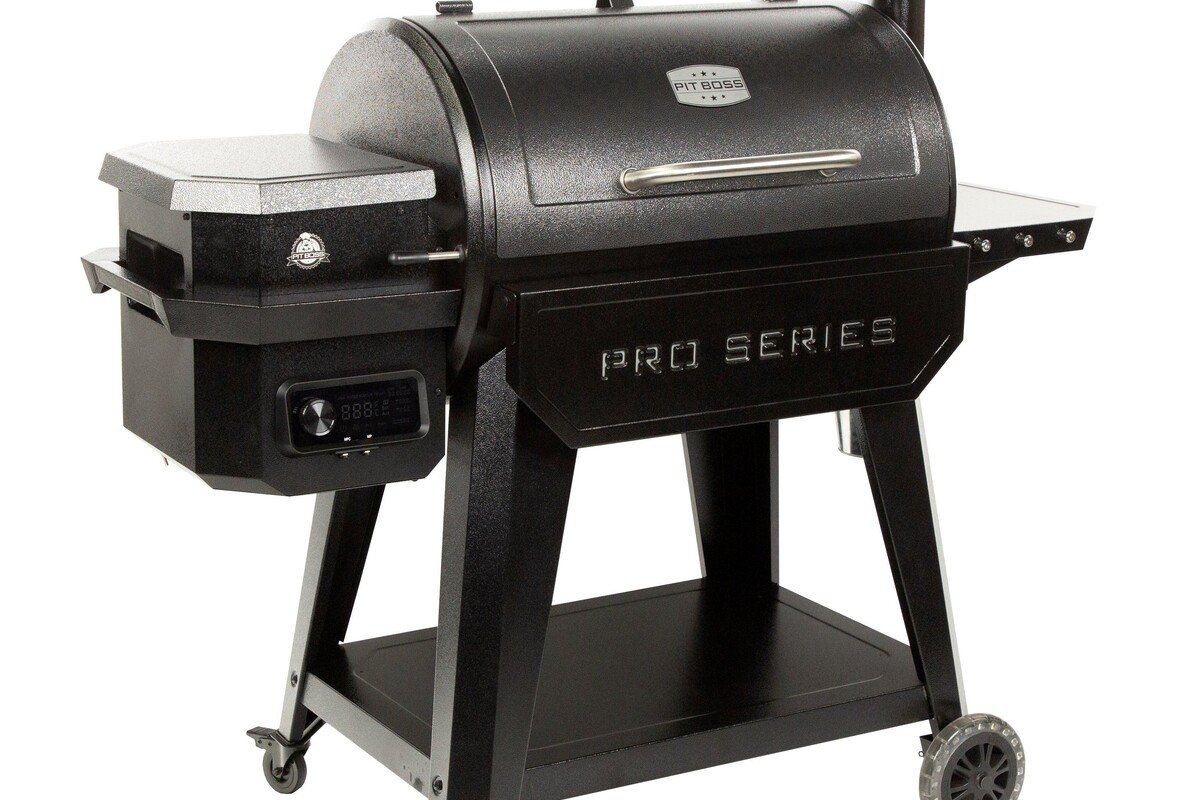
This is the value pick. For around $600, roughly a third of what the Traeger or Weber cost, you get 850 square inches of cooking space, a digital PID controller instead of the older on/off style, and WiFi plus Bluetooth connectivity through the Pit Boss app. The Flame Broiler lever opens a direct path to the firepot (the small cup where the pellets burn) for searing, and Pit Boss claims it can hit 1,000°F in that mode. That is well beyond what any other grill here reaches even at its normal ceiling of 500°F.
The 20-pound hopper is the smallest of the five, so it'll need a mid-cook refill on a long overnight brisket where the Z Grills below wouldn't. Pit Boss backs the grill with a 5-year limited warranty, which is solid for the price tier even if it doesn't match Traeger's decade-long coverage.
If you're buying your first pellet smoker and aren't sure yet how often you'll use it, this is the sensible place to start. You're not giving up much in day-to-day function to save well over a thousand dollars.
Z Grills 700D4E
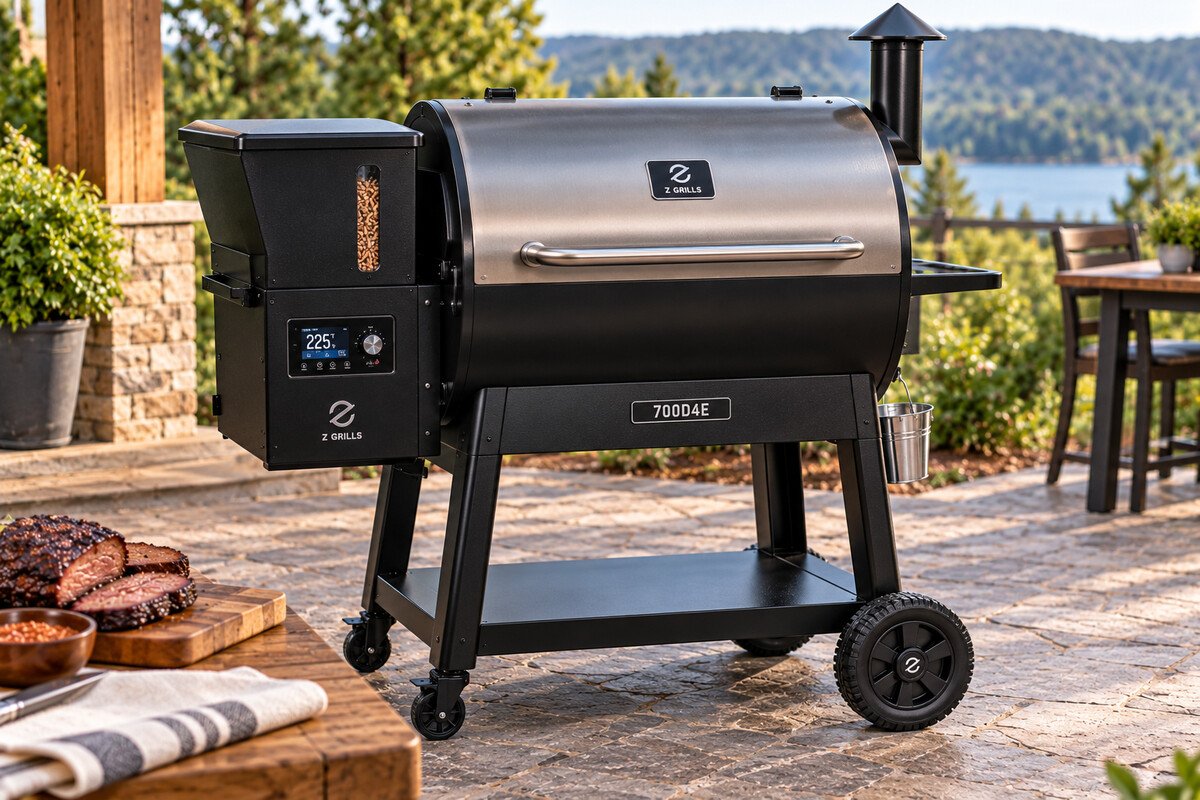
Z Grills built its reputation as a budget-friendly, direct-to-consumer alternative to the bigger brand names, and the 700D4E is the model that best shows why. The 28-pound hopper is the largest of any grill on this list, and Z Grills estimates around 28 hours of unattended cook time on a full load, enough to cover the longest overnight brisket or pork shoulder without a mid-cook pellet run.
Cooking area is smaller than the rest of this lineup at 697 square inches (193 up top, 504 on the main grate), and the temperature ceiling matches the Traeger and Camp Chef at 500°F. The PID 3.1 controller and WiFi/Bluetooth app control put it on similar technical footing to grills costing twice as much, and it comes with two included meat probes.
At around $877 with regular promotional pricing, it lands between the Pit Boss and Camp Chef. The pitch here isn't "cheapest possible" the way the Pit Boss is. It's "biggest hopper for the money," which matters a lot if you regularly do long overnight cooks and don't want to set an alarm to refill pellets at 3 a.m.
Hopper Size and Pellet Consumption: What Matters
Hopper size gets treated like a headline spec, but what matters is runtime, and that depends on temperature as much as pellet capacity. A pellet grill burns through fuel much faster at 500°F than it does holding 225°F for a low-and-slow cook, so a 20-pound hopper can be plenty for most cooks and still run dry on a long, hot sear session. If your typical cook is a 12-to-16-hour brisket at low temperature, the Z Grills' 28-pound hopper is a clear advantage. If you mostly do shorter, hotter cooks like ribs or chicken, hopper size matters much less and the smaller Pit Boss hopper won't be a practical issue.
Pellet quality also affects how far a hopper of fuel goes. Cheap, filler-heavy pellets burn faster and produce more ash than 100% hardwood pellets, so the "hours per hopper" figures manufacturers publish are usually based on their own or a comparable premium pellet, not the cheapest bag at the hardware store.
WiFi Controllers: Worth the Upgrade?
All five grills on this list include WiFi or WiFi-plus-Bluetooth app control, which has become standard even at the budget end of the category. In practice, the app is most useful for two things: getting an alert when your meat probe hits target temperature so you're not checking a phone every 20 minutes, and adjusting the pit temperature without walking outside in bad weather. It's a useful convenience, not a gimmick, but it's also not a reason by itself to pay more for one grill over another, since every model here has it in some form.
The bigger differentiator is the quality of the temperature control underneath the app, which is where PID controllers (used by all five grills here) matter most. A PID controller measures the actual pit temperature many times per second and makes small, continuous adjustments to the auger and fan, rather than just switching fully on or off when the temperature drifts. That's what keeps a smoker holding 225°F within a few degrees for eight hours instead of swinging up and down.
How much should I expect to spend on a good pellet smoker?
A reliable pellet smoker with a PID controller starts around $600, like the Pit Boss Pro Series II 850 above. You can spend up to $2,000 or more for a flagship like the Traeger Ironwood XL, but the jump mostly buys you build quality, warranty length, and app polish rather than a dramatically different final result on a calm day.
Does food from a pellet smoker actually taste smoky, or more like an oven?
It depends on temperature. Pellet smokers produce the most visible smoke and flavor in the 180 to 250°F range, often called the "smoke zone." Cooking at 350°F and above produces much less smoke flavor, which is why high-heat searing on a pellet grill tastes closer to a gas grill than a stick-burner.
How long does a full hopper of pellets last?
It depends heavily on temperature. A hopper that lasts 20+ hours at 225°F might only last 6 to 8 hours at 450 to 500°F, since the auger has to feed pellets much faster to maintain a higher temperature. Manufacturer "hours per hopper" claims are usually based on lower smoking temperatures, not high-heat grilling.
Can I use a pellet smoker in winter or in the rain?
Yes, pellet smokers are designed for outdoor use in most weather, though cold temperatures and wind will make the auger work harder and burn through pellets faster to hold the same temperature. Keep the smoker under a cover or in a dry spot when not in use, since pellets themselves turn to mush if they get wet inside the hopper.
Is a bigger cooking area always better?
Not necessarily. A bigger grate is useful if you regularly cook for a crowd or smoke multiple large cuts at once. But a larger cooking chamber also takes longer to heat up and can struggle to hold a steady temperature in windy or cold conditions. For most home cooks, 700 to 900 square inches covers a full brisket, a couple of racks of ribs, or a turkey with room to spare.
Whichever of these you land on, the fundamentals of getting good results are the same: use quality pellets, don't skip preheating, and give the grill's own thermometer a few minutes to stabilize before trusting the reading. If you're also looking at fuel, our guide to picking the right wood for smoking brisket covers how wood choice affects flavor once you've settled on the grill itself.
If you're weighing two of the biggest pellet smoker brands directly, see our Traeger vs Pit Boss comparison.