
Table of Contents
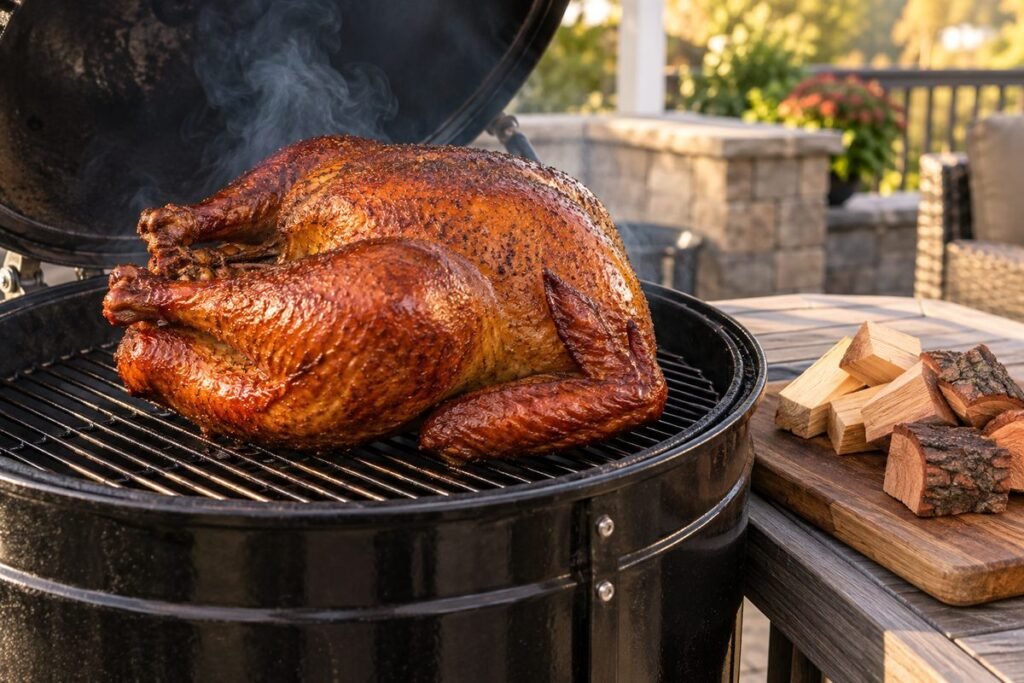
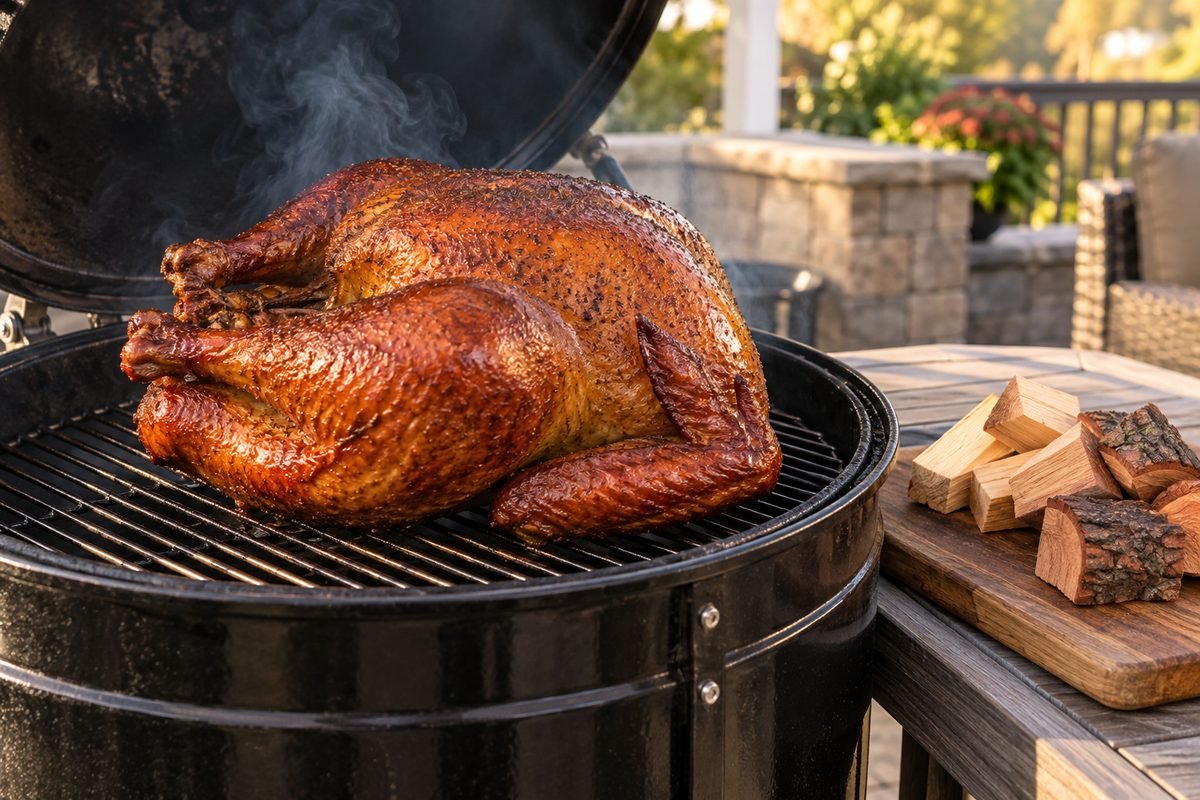
The best wood for smoking turkey is mild. Apple and cherry top most lists, with pecan close behind. Turkey is lean and mild, and it picks up smoke fast, so wood that works well on brisket can make turkey taste bitter. A light, fruity smoke adds flavor without covering up the bird.
This guide ranks the best woods for turkey, shows which blends work, and explains which wood form to buy for your smoker. It also covers woods to avoid and USDA food safety basics.
The short answer
Quick answer
- Best for beginners: apple
- Best for skin color: cherry
- More flavor: pecan
- Stronger smoke: a little hickory mixed with apple or cherry
For most people, the best wood for smoking turkey is apple or cherry. Use either one if you want a wood that is hard to get wrong. For a little more smoke flavor, use a blend of cherry and pecan, or cherry with a small amount of hickory. Skip mesquite, or use only a tiny amount. Whatever wood you pick, use the form that fits your smoker: chips for electric and gas smokers, chunks for charcoal smokers, and pellets for pellet grills.
Why turkey needs a milder wood than brisket
Turkey and brisket cook very differently. A brisket is a big, fatty cut with a thick bark, and it spends many hours in the smoker. A turkey is lean, with mild meat and thin skin. The USDA says it can take 4 to 8 hours to smoke a turkey, far shorter than a long brisket cook.
Lean, mild meat shows smoke flavor quickly. A strong wood that tastes great on beef can turn turkey harsh or bitter, especially on the skin, which takes on the most smoke. That is why the best wood for smoking turkey is usually a mild one, and why strong woods are better used in small amounts. If you also smoke beef, our guide to the best wood for smoking brisket covers the stronger woods that suit it.
The best woods for smoking turkey, ranked
These woods are ranked from the most forgiving to the hardest to use. For most cooks, the best wood for smoking turkey is one of the first three.
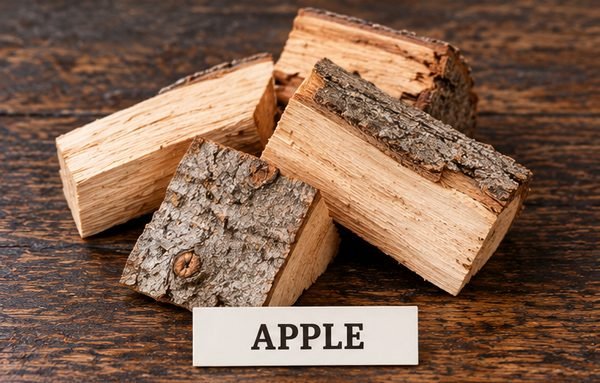
Apple
Mild, fruity smoke. The easiest place to start.
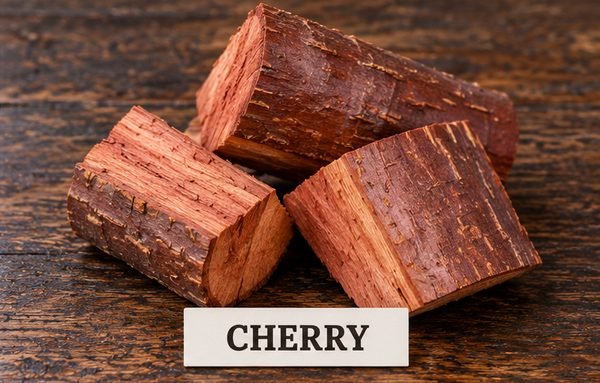
Cherry
Mild and slightly sweet. Known for a deep reddish-brown skin.
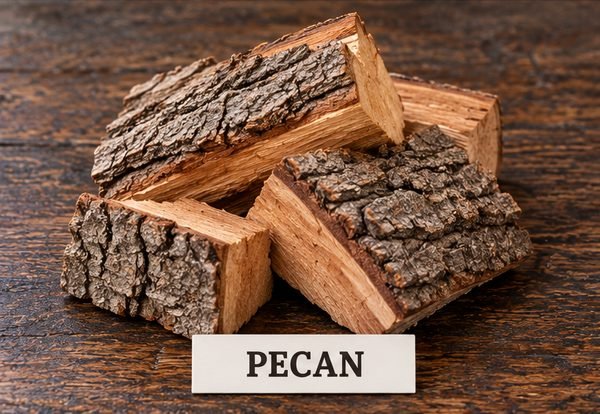
Pecan
Nuttier and a bit stronger, without hickory's sharp edge.
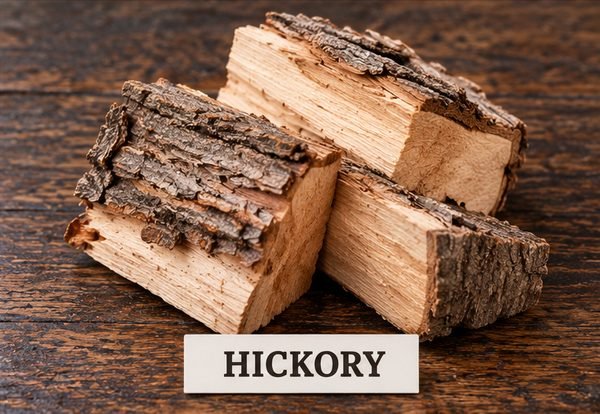
Hickory
Strong, bacon-like smoke. Best as a small part of a blend.
1. Apple: the easiest choice
Apple wood gives a mild, slightly sweet, fruity smoke. It's hard to over-smoke a turkey with apple, which makes it the best wood for smoking turkey if you are new to smoking. It works well on its own and blends well with cherry or pecan.
2. Cherry: mild with good color
Cherry is mild and slightly sweet, much like apple. Many pitmasters choose cherry because it gives poultry skin a deep reddish-brown color. Cherry works alone, and it is one of the best woods to blend with a stronger wood like hickory or pecan.
3. Pecan: a step up in flavor
Pecan is part of the hickory family, but its smoke is milder and nuttier. It gives turkey a bit more smoke flavor than fruit woods, without hickory's sharp edge. Pecan is a good pick if you find apple too light.
4. Maple: mild and slightly sweet
Maple gives a light, mellow smoke with a hint of sweetness. It suits turkey and other poultry well. It is a little less common than apple or cherry, so check what your store carries.
5. Hickory: strong, so use a little
Hickory gives a strong, bacon-like smoke. Used alone for a whole turkey, it can be too much for many people. It works best as a small part of a blend, mixed with more apple or cherry.
6. Oak: medium and steady
Oak provides a medium smoke that isn't sweet or harsh. It is a common base wood in offset smokers and in many pellet blends. On its own, it gives turkey a plain, smoky flavor. Mixed with a fruit wood, it gives a fuller smoke.
7. Mesquite: the one to be careful with
Mesquite has the strongest smoke of the common smoking woods. It burns hot, and on a lean bird it can taste harsh. If you want to try it, use one small piece mixed with a milder wood. Most people are better off skipping it for turkey.
Wood comparison at a glance
Good wood blends for turkey
Blending two woods lets you add a little more flavor while keeping the smoke mild. A common starting point is to use mostly a mild wood and add a smaller amount of a stronger one. Trying a blend is a good way to find your own best wood for smoking turkey. These blends are popular:
- Apple and cherry. Both mild and fruity. A safe blend that gives good skin color.
- Cherry and pecan. A little more depth, with a nutty edge.
- Cherry and a little hickory. More smoke flavor. Keep the hickory to a small share, such as one part hickory to two or three parts cherry.
- Apple and oak. A steady, fuller smoke, handy in an offset smoker that burns oak.
Chips, chunks, pellets, or splits: which form to use
The right wood form depends on your smoker, not the turkey. Here is how to match them:
- Wood chips suit electric smokers, gas smokers, and grills with a smoker box. They burn fast, so you add more as they burn out.
- Wood chunks suit charcoal smokers and kamado grills. A few fist-sized chunks on top of the charcoal give steady smoke for a long time.
- Pellets are made for pellet grills. Use pellets made for cooking, never pellets made for home heating.
- Splits are small logs for offset smokers, where the wood serves as both fuel and smoke.
If you are still choosing a smoker, our guides to the best pellet smokers, best electric smokers, and best charcoal smokers cover each type.
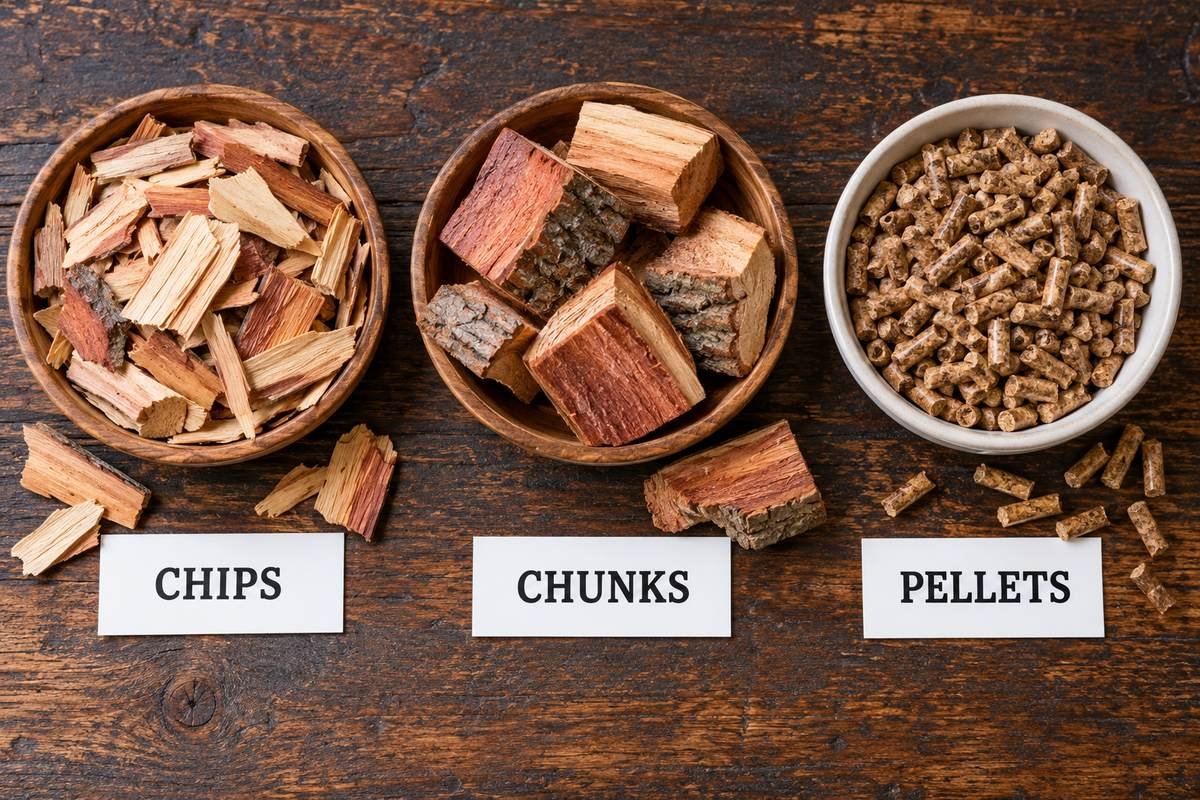
Best wood chips for smoking turkey
The best wood chips for smoking turkey are apple and cherry, or a mix of the two. Pecan chips are a good choice if you want a bit more flavor. Since chips burn quickly, add a handful at a time, and add more when the smoke fades during the first few hours.
Soaking chips is optional. Wet chips have to dry out before they smoke, so soaking mostly delays the smoke rather than increasing it. If you do soak them, drain them well first.
Best pellets for smoking turkey
The best pellets for smoking turkey are apple, cherry, or a fruitwood blend. Many pellet bags are blends, with a flavor wood mixed into a base wood such as oak or alder. Read the label so you know what you are getting. A bag sold as cherry may be part cherry and part base wood.
Keep pellets dry. Damp pellets swell and break apart, and they can jam the auger in a pellet grill. Store them in a sealed container off the floor.
How much wood a turkey needs
Turkey takes on most of its smoke in the first few hours of the cook. You do not need heavy smoke from start to finish. On a charcoal smoker, a few chunks of wood are often enough for a whole bird. In an electric or gas smoker, add chips during the first few hours, then let the turkey finish without adding more.
Watch the smoke, not just the wood. Thin, light smoke gives the best flavor. Thick white smoke pouring out of the smoker often means the fire isn't getting enough air, and it can make the turkey taste bitter. If your smoker struggles to hold a steady fire, our guide to why a smoker won't hold temperature can help.
Woods to avoid
Choosing the best wood for smoking turkey also means knowing what to avoid. Some wood should never go in a smoker:
- Softwoods like pine, fir, spruce, and cedar. They are full of sap and resin that give off harsh, sooty smoke.
- Treated, painted, or stained wood. This includes old lumber, fence boards, and pallets. The wood's chemicals end up in the smoke.
- Moldy or rotten wood. It gives off bad-tasting smoke.
- Green wood. Freshly cut wood is full of water and makes heavy, bitter smoke. Use wood that has dried well.
- Heating pellets. Pellets made for wood stoves aren't meant for food. Buy pellets labeled for cooking or smoking.
Food safety basics for smoked turkey
Wood choice affects flavor, but temperature affects safety. The USDA's guide to smoking meat and poultry gives these basics:
- Keep the smoker between 225°F and 300°F for the whole cook.
- Cook all poultry to a safe minimum internal temperature of 165°F, checked with a food thermometer.
- Never thaw a turkey at room temperature. Thaw it in the refrigerator.
The USDA also says turkeys that are grilled or smoked should not be stuffed. Cook the stuffing separately.
Cook to 165°F
Use a food thermometer, not skin color or cooking time.
For a whole turkey, check the thickest part of the breast and the innermost part of the thigh and wing. Keep the smoker between 225°F and 300°F, and do not stuff a turkey you plan to smoke.
A good thermometer makes this easy. A probe that stays in the bird lets you watch the temperature without opening the lid. Our guides to the best meat thermometers and best wireless meat thermometers compare the options.
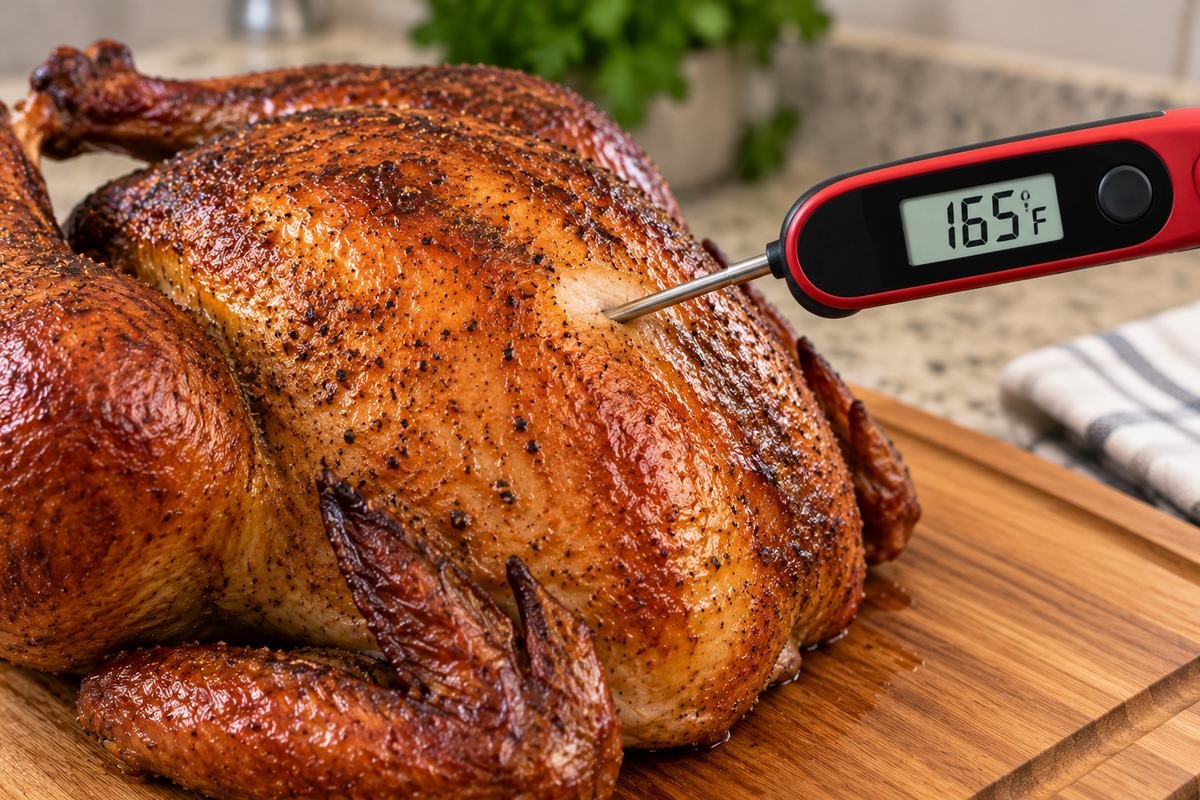
Common mistakes
Even the best wood for smoking turkey cannot fix these common mistakes:
- Using a strong wood alone. Hickory or mesquite alone can make turkey bitter. Blend either one with a fruit wood instead.
- Too much smoke. More smoke is not more flavor. Thin smoke for the first few hours is enough.
- Opening the lid often. Each time you open it, heat and smoke escape, and the cook takes longer.
- Guessing when it is done. Color and time are not reliable. Use a thermometer and cook to 165°F.
- Rubbery skin. Skin cooked at a low temperature can turn rubbery. Many cooks run the smoker toward the upper end of the USDA's 225°F to 300°F range to help the skin crisp.
Frequently asked questions
What is the best wood for smoking turkey?
Apple and cherry are the most popular choices. Both give a mild, slightly sweet smoke that suits lean turkey and is hard to overdo. Pecan is a good pick if you want a little more flavor.
Is hickory too strong for turkey?
Used alone, hickory can be too strong for many people. It works best as a small part of a blend, with more apple or cherry.
Should I use wood chips or chunks for turkey?
It depends on your smoker. Use chips in electric and gas smokers and chunks in charcoal smokers and kamado grills. Pellet grills use pellets.
What are the best pellets for smoking turkey?
Apple, cherry, or a fruitwood blend. Many pellet bags mix a flavor wood with a base wood, so read the label to see what is inside.
Do I need to soak wood chips before smoking turkey?
No. Soaking is optional. Wet chips have to dry before they smoke, so soaking mostly delays the smoke.
The bottom line
The best wood for smoking turkey is a mild wood like apple or cherry, or a blend with a little pecan or hickory for more flavor. Match the form of wood to your smoker, keep the smoke light, and use a thermometer to cook the turkey to 165°F.
Keep reading: our guides to the best wood for smoking brisket, the best instant-read meat thermometers, and how to clean a smoker after the holiday cook.