
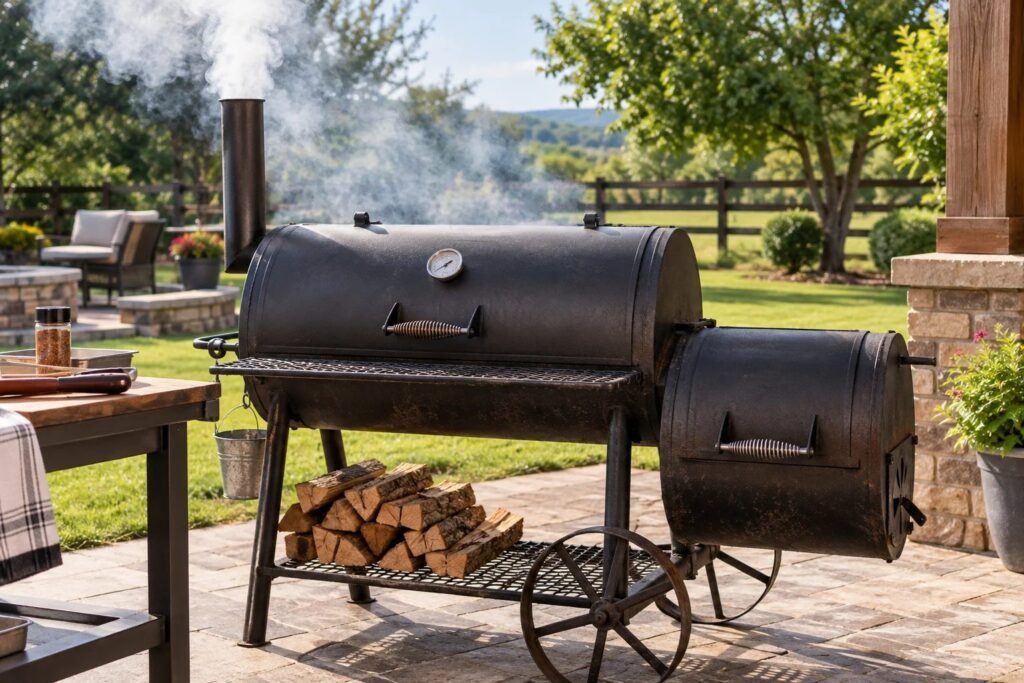
An offset smoker isn't a set-and-forget machine. It is a firebox, a cook chamber, and a stack, and the fire is entirely your job from the first splitting of wood to the last check of the coals. That is also exactly why people love them: nothing else gets you that thin blue smoke and deep bark (the dark, crusty outer layer) the way a stick burner does.
We looked at six offset smokers that span $150 to nearly $3,000, from a starter barrel smoker to a quarter-inch steel pit built in Kansas. Here is what each one gets you, and which one fits your backyard and your budget.
Table of Contents
Our Top Picks at a Glance
- Best Overall: Oklahoma Joe's Highland Classic
- Best Budget: Royal Gourmet CC1830S
- Best Reverse Flow: Oklahoma Joe's Longhorn Reverse Flow
- Best Grill and Smoker Combo: Char-Griller Grand Champ
- Best for Small Backyards: Dyna-Glo Signature Series
- Best Splurge: Yoder Loaded Wichita
How We Picked These
We did not put all six of these side by side over the same fire. What follows is built from manufacturer specs, published pricing at major retailers, and long-running owner reviews and forum threads, cross-checked against each other. We weighted steel gauge and seal quality over marketing copy. We also looked for a firebox that can hold a fire through a long cook, and made sure the price and cooking area we list came from the manufacturer or a major retailer, not a rounded-off marketing number. We also picked across price tiers on purpose, since "best" means something different at $150 than it does at $3,000.
1. Oklahoma Joe's Highland Classic: Best Overall
Price: $429.99 | Cooking area: 879 sq in (616 sq in main chamber, 263 sq in firebox) | Material: heavy-gauge steel, porcelain-coated wire grates
The Highland is the offset smoker most people picture when they hear the word, and it has earned that reputation. It has a full-size firebox, adjustable dampers (adjustable vents that control airflow) on both the firebox and the smokestack, a removable ash pan, and large wagon-style wheels that make it easy to roll into position. At 156 pounds, it is light enough for one person to move but heavy enough to hold a fire reasonably well for the price.
2. Royal Gourmet CC1830S: Best Budget
Price: $149.99 to $228.99 depending on sale | Cooking area: 823 sq in (475 sq in main grate, 151 sq in warming rack, 197 sq in offset chamber) | Material: painted steel, porcelain-enameled grates
This is the smoker to buy if you are not sure offset smoking is for you yet and do not want to spend $500 finding out. The offset chamber is a true firebox, with its own charcoal door and damper, and the two-level adjustable charcoal pan lets you raise or lower your fuel relative to the grates. It also works as a full charcoal grill, not just a smoker, which most sub-$200 offset units cannot claim.
3. Oklahoma Joe's Longhorn Reverse Flow: Best Reverse Flow
Price: $899.99 | Cooking area: 1,060 sq in (751 sq in primary, 309 sq in secondary) | Material: heavy-gauge steel, porcelain-coated grates
The Longhorn switches between reverse flow and traditional offset modes, which is the main reason to pay the jump over the Highland. Four baffle plates route heat and smoke under the cook chamber before it rises past the meat, which evens out the temperature swing you would otherwise get between the firebox end and the far end of a traditional offset. It is also bigger, with room for two full briskets or four pork shoulders.
4. Char-Griller Grand Champ: Best Grill and Smoker Combo
Price: $729 | Cooking area: 1,200 sq in total (780 sq in primary) | Material: heavy-duty steel
The Grand Champ's side firebox is fully removable, so on nights when you just want to grill burgers, you can pull it off and use the barrel body on its own. The insulated body holds heat better than a plain barrel design in cooler weather, and the total cooking area is generous for the price.
5. Dyna-Glo Signature Series: Best for Small Backyards
Price: about $400 to $450, varies by retailer | Cooking area: 675 sq in | Material: heavy-gauge steel body, porcelain-enameled grates
This is the smallest true offset smoker on our list, and that is the point. The collapsible front workstation folds away when you are not cooking, which matters on a smaller patio, and the cool-touch spring-loaded lid handles are a nice detail that most smokers in this price range skip.
6. Yoder Loaded Wichita: Best Splurge
Price: starting at $2,899 plus shipping | Cooking area: 1,628 sq in (four 19.8 x 10 in grates plus a two-piece upper shelf) | Material: quarter-inch steel, built in Kansas
Quarter-inch steel is the main difference here. It holds heat for hours with far less babysitting than any of the thinner smokers on this list, and the 304 stainless grates and shelf will outlast everything else here by a wide margin. Yoder has built pits in Kansas since 1979, and this is the version of an offset smoker you buy when you are done shopping for good and want the last one you will ever need.
Reverse Flow vs. Traditional Offset: Does It Matter?
A traditional offset pulls heat and smoke from the firebox, across the cook chamber, and out the stack on the far end. That means the end closest to the firebox runs noticeably hotter, often by 30 to 50 degrees, than the end near the stack. A reverse flow smoker adds a steel plate under the cook chamber that routes heat and smoke down and back before they rise past the meat, which evens that swing out considerably.
The tradeoff is more than cleanup. A more even chamber is easier to manage, especially for a beginner, but some pitmasters feel a traditional offset produces slightly more smoke flavor and a better bark, since the meat sits more directly in the airflow. If you are new to fire management, reverse flow forgives more mistakes. If you already know how to work a fire, a traditional offset gives you more control over which cut gets more heat.
Common Offset Smoker Mistakes to Avoid
Most bad offset smoker experiences trace back to one of these, regardless of which smoker you buy:
- Skipping the seal. Almost every offset smoker under $1,000 leaks smoke around the lid and firebox door out of the box. A roll of high-temp silicone gasket rope solves most of it in an afternoon.
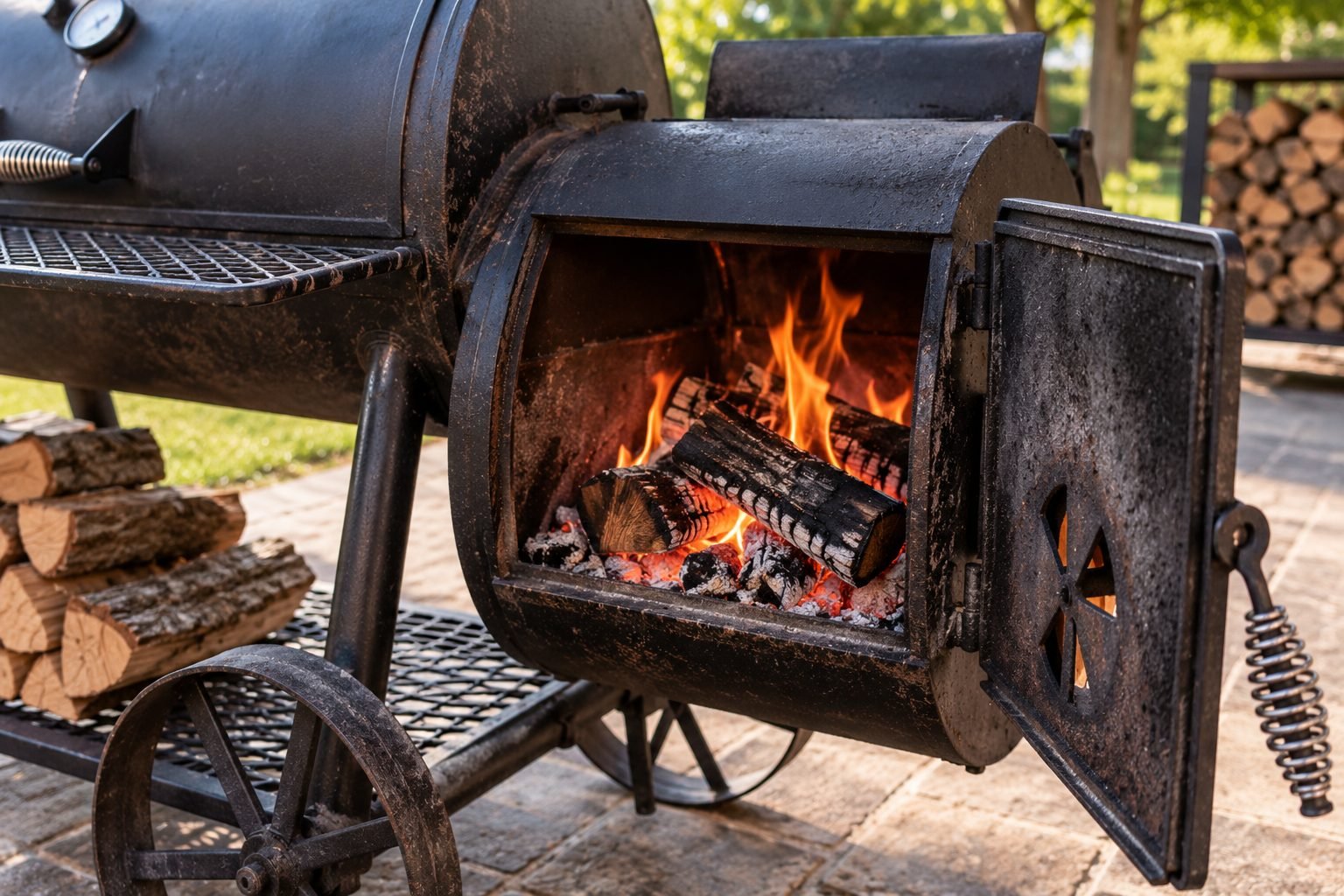
- Closing the smokestack damper to control temperature. Run the stack damper wide open at all times and control temperature with the firebox intake instead. A closed stack traps creosote (a bitter, sooty residue from dirty smoke) and produces thick, bitter white smoke instead of thin blue smoke.
- Using only briquettes in a stick burner. Offset smokers are built around wood splits or a wood-and-charcoal mix. Straight briquettes burn cooler and dirtier than the fire these smokers are designed for.
- Trusting the lid thermometer. The dome-mounted gauge reads air temperature well above the grate, not the temperature at meat level. A separate leave-in probe thermometer at grate height is the only way to know your actual cooking temperature.
- Walking away from the fire for too long. A firebox load typically runs 45 minutes to an hour and a half, depending on the wood and the smoker. Offset smoking means checking the fire every 30 to 45 minutes, not setting a timer and leaving.
If you are still working out why your fire will not hold a steady temperature, our guide on why your smoker won't hold temperature covers the fixes in more depth. A good leave-in meat thermometer solves half of the guesswork on its own.
Frequently Asked Questions
Is an offset smoker worth it for a beginner?
Yes, but start on the cheaper end. A $150 to $450 offset smoker like the Royal Gourmet or the Oklahoma Joe's Highland Classic teaches fire management without a big financial risk if stick burning turns out not to be for you.
What steel gauge should I look for?
Lower gauge numbers mean thicker steel. Most offset smokers under $500 use steel in the 1/8 inch range or thinner, while premium pits like the Yoder Loaded Wichita use a full quarter inch. Thicker steel holds heat more steadily through wind and cold, but it also costs more and weighs more.
Do I need to seal a new offset smoker before using it?
For nearly every smoker under $1,000, yes. Factory seals on the lid and firebox door leak smoke straight out of the box. A roll of high-temp silicone gasket rope, applied in an afternoon, fixes most of it.
How long does a firebox load last?
Typically 45 minutes to an hour and a half, depending on the wood and charcoal mix and the smoker's size. Plan on tending the fire every 30 to 45 minutes rather than setting a timer and walking away.
Offset smoker vs. pellet smoker: which should I buy?
An offset gives you more smoke flavor and hands-on control but demands constant fire tending. A pellet smoker automates temperature control at the cost of some smoke intensity. Our best pellet smoker guide covers the lower-maintenance side of that tradeoff in more depth.
Which One to Buy
If you want the classic backyard offset experience at a fair price, the Oklahoma Joe's Highland Classic is the one most people should buy first. If you are not sure offset smoking is for you yet, start with the Royal Gourmet CC1830S and learn fire management for under $200. And if you already know you will use it every weekend for years, the extra cost of the Yoder Loaded Wichita or the more even heat of the Longhorn Reverse Flow is money spent on fewer headaches, not just a bigger price tag.
New to smoking in general and not sure an offset is even the right first smoker? Our best smoker for beginners guide compares offset, pellet, and electric side by side, and our best pellet smoker guide covers the lower-maintenance alternative if you're not looking for hands-on fire management.