
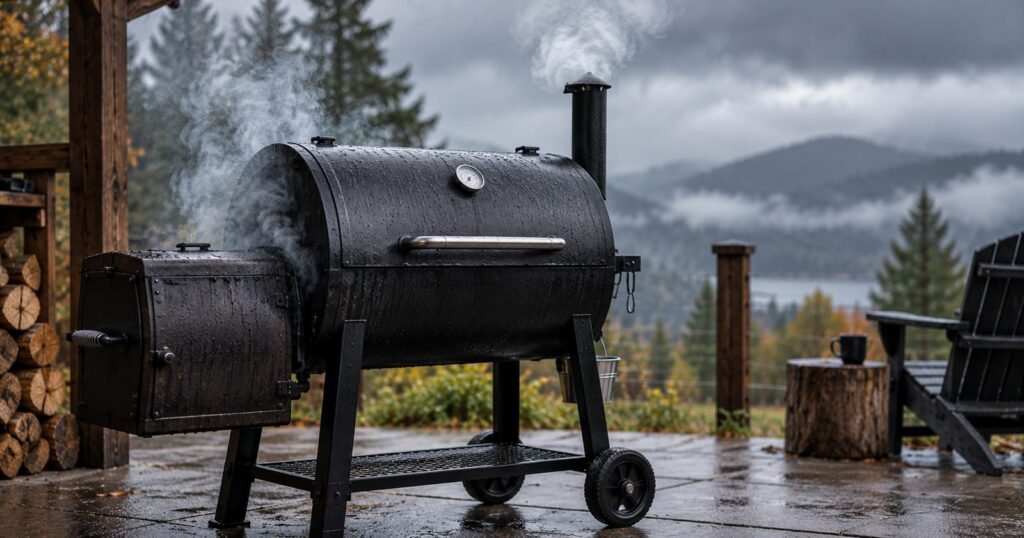
You set the dial to 225°F, walk away for twenty minutes, and come back to a chamber reading 260°F, or worse, 190°F and dropping. If your smoker won't hold temperature, you are not the first person to fight with it, and the fix is almost never "buy a new grill." Most temperature problems trace back to a handful of causes, and most take less than ten minutes to check.
This guide walks through the common reasons a smoker won't hold temperature, starting with the most common culprits and working down to the rare ones, so you can troubleshoot in the order that saves you time. It covers pellet grills first, since that's where most of these problems show up, then adds the specific fixes for offset, kamado, and electric smokers.
Table of Contents
The Short Answer
If your smoker won't hold temperature, check these four things before anything else: the pellets (old, wet, or low-quality pellets cause more swings than any other single issue). Next, check the burn pot and drip tray (ash and grease buildup chokes airflow). Then check the temperature probe (a greasy sensor reads wrong and confuses the whole system). Last, check the weather (wind and cold pull heat out of the barrel faster than the auger can replace it). Fix those four and the vast majority of temperature problems go away. Everything else on this list, from auger (the screw that feeds pellets to the fire) jams to a failing fan, is rarer but still worth ruling out if the basics are fine.
How We Researched This
When a smoker won't hold temperature, it's rarely one single thing. This troubleshooting guide draws on manufacturer support documentation from Traeger and Pit Boss, independent technical writeups from pellet grill and BBQ specialists, and owner reports from smoking forums. We cross-checked them against each other rather than relying on any single source. Where a fix applies only to pellet grills, or only to offset and kamado-style smokers, we call that out instead of treating every smoker the same.
Bad or Wet Pellets Are the Number One Cause
Traeger itself calls pellet quality the single most common reason a smoker won't hold temperature, and it lines up with what most experienced owners will tell you first. Low-density pellets, pellets that have absorbed moisture from humid storage, or a hopper full of sawdust and broken fines all burn unevenly. The auger feeds fuel at a steady rate assuming consistent pellets, and when that fuel varies in density, the fire varies with it, which shows up on your controller as a temperature that won't settle down.
A quick test: a good pellet snaps cleanly and feels dense in your hand. A bad one crumbles or feels soft. If you store pellets in a garage or shed without an airtight container, especially somewhere humid, that alone can be the entire problem. Empty the hopper, vacuum out the dust sitting at the bottom of the auger tube, and load fresh, dry pellets before you troubleshoot anything else on this list. It's the cheapest fix on this page, and it solves the largest share of complaints.
Ash and Grease Buildup Blocking Airflow
A pellet smoker needs a clean burn pot to work correctly. Ash accumulates in the pot every time you cook, and once it builds up past a certain point, it smothers the hot rod's ability to ignite fresh pellets and blocks the airflow the fire needs. Traeger recommends cleaning the burn pot and vacuuming out ash roughly every 20 hours of cook time, and skipping that maintenance is a common reason a smoker that used to hold temperature just fine starts drifting.
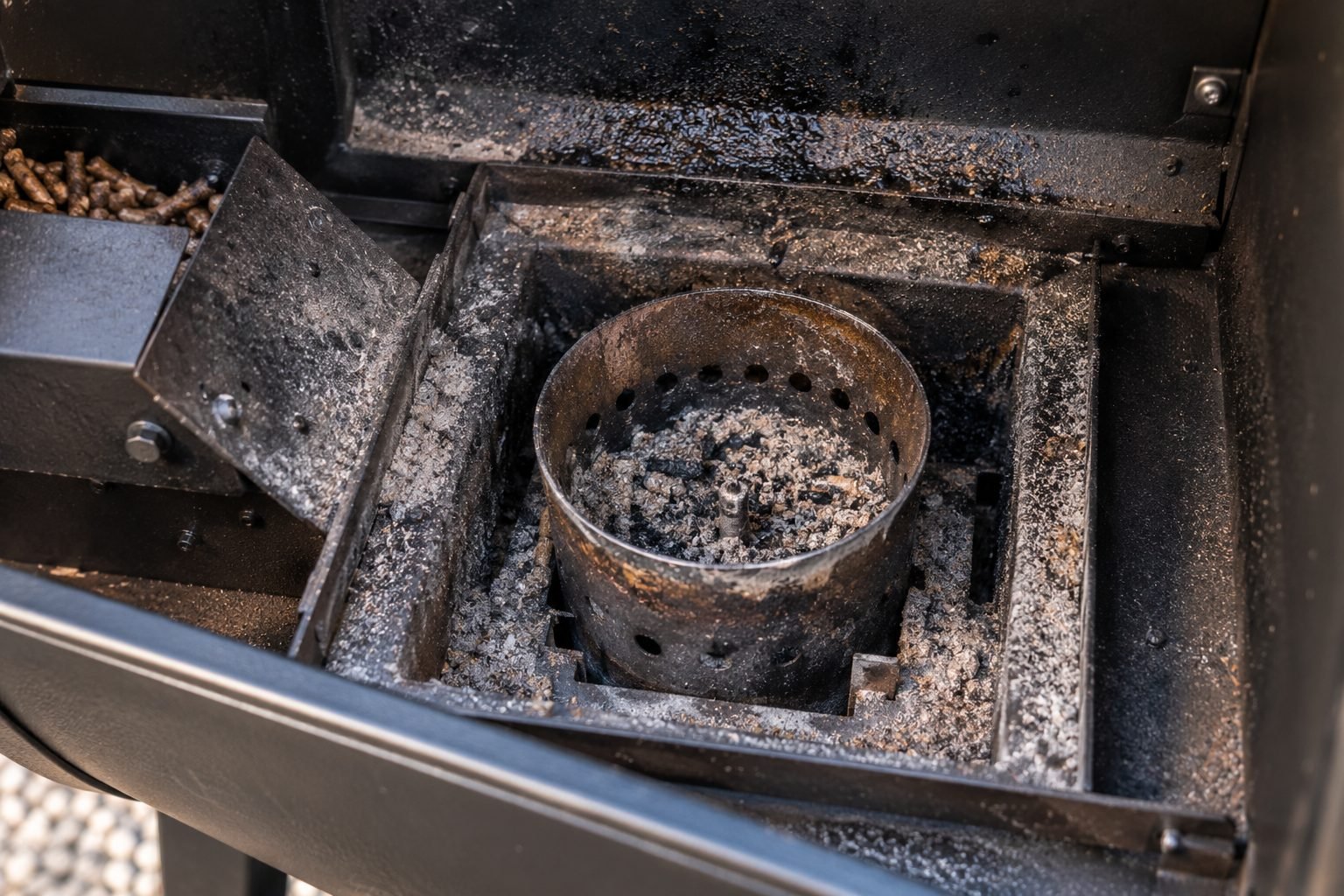
Grease causes a related but separate problem. A drip tray or heat baffle (a metal plate that spreads the heat evenly) caked in old grease disrupts how heat spreads through the cooking chamber. As a result, one side of the grill runs hotter than the probe location while the average bounces around. Pull the drip tray and heat baffle out, scrape off the buildup, and check that neither piece is warped or sitting crooked. A tilted baffle can dump grease straight onto the fire pot and cause exactly this kind of instability.
A Dirty or Faulty Temperature Probe
Every pellet grill controller makes its feeding decisions based on what the internal temperature probe reports, and if that probe is reading wrong, the whole system chases a number that doesn't match reality. A film of grease over the sensor insulates it slightly, so it reads a few degrees cooler than the actual chamber temperature. The controller sees that lower number, decides it needs more heat, and overfeeds pellets, which is exactly how you get a smoker that keeps overshooting and swinging even though nothing else is wrong.
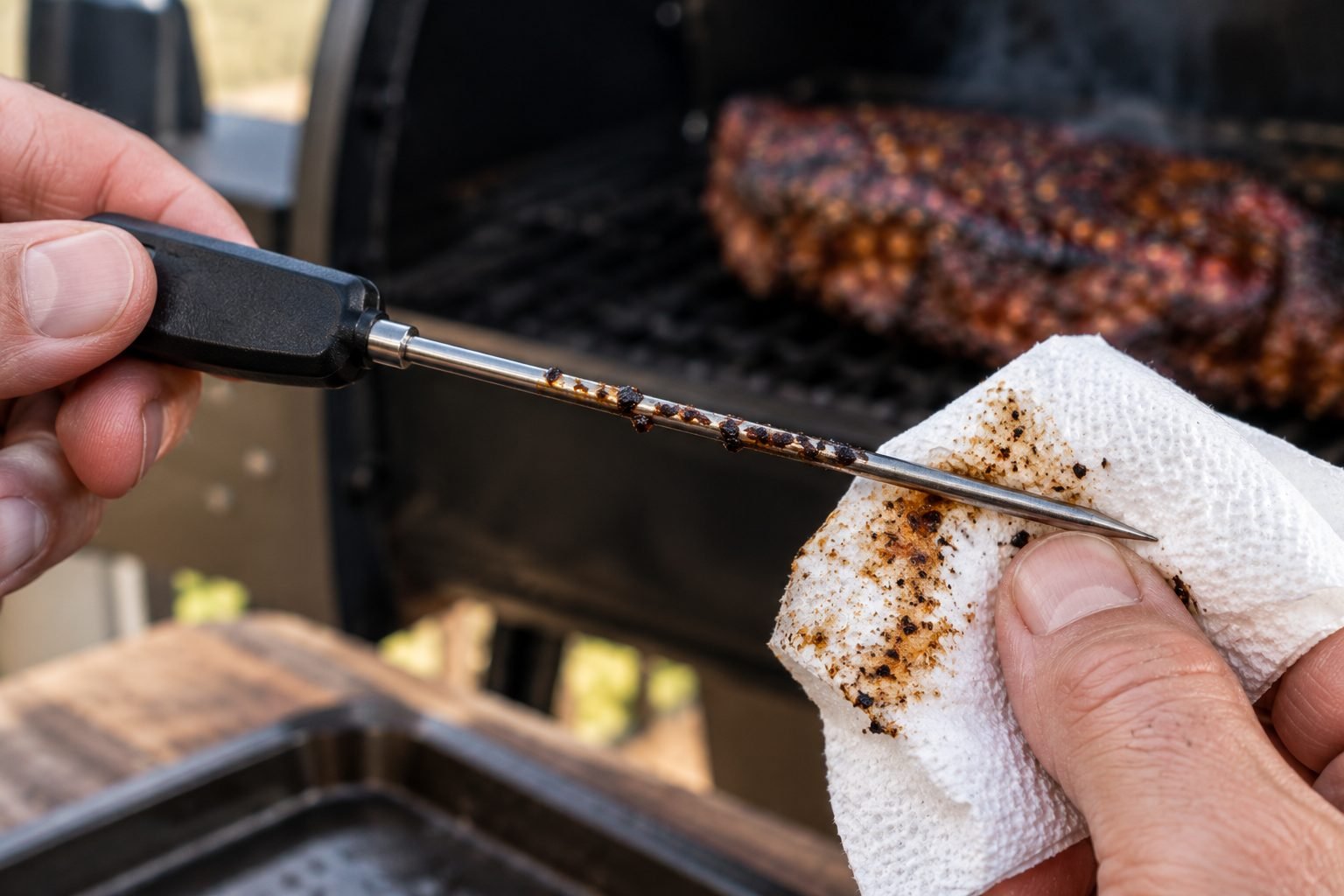
Traeger's own benchmark is useful here: a properly functioning probe should read within about 20°F of actual ambient air temperature when the grill is off and cool. Wipe the probe down with a damp cloth, check that it isn't bent or touching any other metal part of the grill, and confirm you removed any factory protective cap during assembly. That's a surprisingly common oversight on grills fresh out of the box.
Your P-Setting or Smoke Mode Is Fighting You
Older, time-based pellet grill controllers use what's called a P-setting to control how often the auger feeds pellets. A lower P-setting shortens the pause between feed cycles, which delivers fuel faster and works well in cold weather, but it can also overshoot your target and widen the swing. A higher P-setting slows the feed rate and can undershoot instead, occasionally letting the fire nearly die out between cycles. If your smoker won't hold temperature consistently and you're on a time-based controller rather than a PID one (a smart controller that keeps adjusting the pellet feed), try a small fix first. Nudge the P-setting (the pause between pellet feeds) one increment at a time based on whether the grill is running hot or cold before you assume something is broken.
Smoke and Super Smoke modes hold temperature less tightly, and that's by design. These modes deliberately run a smoldering, less efficient burn to maximize visible smoke and flavor, which means a wider temperature range on that setting is expected. If the swings show up only on Super Smoke and not on your regular cook setting, that's the mode working as intended.
Cold, Wind, and Rain
A steel barrel loses heat fast in cold or windy conditions, and the auger has to work harder to keep up. Below about 35°F, most manufacturers recommend an insulation blanket, since it cuts down on radiant heat loss through the barrel walls and takes strain off the feed system. Wind adds a second problem on top of the cold: a steady gust across the hopper vents or exhaust can pull heat out of the chamber directly and destabilize the fire, especially on grills without a fully enclosed hopper.
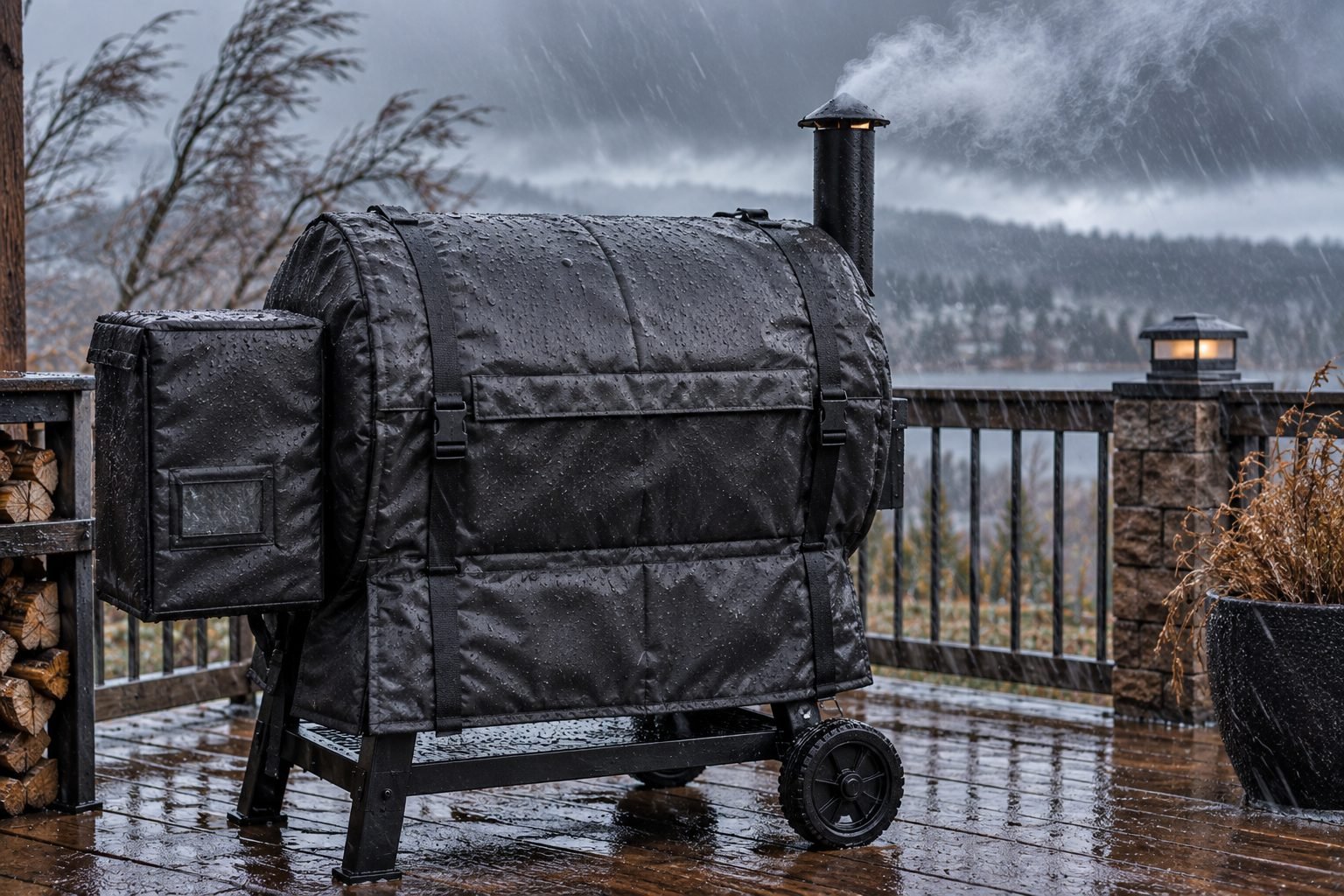
If you cook outside through the winter, a windbreak, even something as simple as parking the grill against a fence or wall on the windward side, does more for stability than most people expect. Combine that with an insulation blanket and a slightly lower P-setting, and cold-weather swings usually come back in line with what you'd see on a mild day.
Opening the Lid Too Often
Every time you lift the lid to check on food, you vent the heat that built up inside the chamber. The grill then has to burn extra pellets to climb back to your set point (the target temperature you choose). Do that every fifteen minutes over a six-hour brisket cook, and you'll see a saw-tooth pattern on any temperature graph, dropping and spiking over and over, that looks like a hardware problem but is just the lid. Use the meat probe and an app or a wireless meat thermometer instead of opening the lid to check, and the chamber temperature will hold far steadier on its own.
Auger Jams and Empty Hoppers
A jammed feed system is one of the simplest reasons a smoker won't hold temperature. An empty hopper is the obvious version of this problem, but a jammed auger causes the exact same symptom while looking like something more serious. Swollen pellets from moisture exposure, a broken chunk wedged in the feed tube, or debris that made its way into the hopper can all stop fuel delivery mid-cook, and once the fire starves, temperature crashes fast. If your smoker won't hold temperature and seems to be losing heat steadily rather than just drifting, check the hopper level first, then pull the auger tube and clear anything blocking it.
Leaky Doors and Lids on Offset and Kamado Smokers
On offset and kamado-style cookers, temperature problems come mainly from air you can't control, not fuel quality. A gap around the firebox (the chamber where the fire burns) door, the joint where the firebox meets the cook chamber, or an ill-fitting lid all let oxygen into the fire uncontrolled. You can't manage temperature if you can't manage the oxygen feeding it. Sealing those gaps with high-temperature gasket tape or furnace cement noticeably tightens up an offset smoker's swing, sometimes down to a steady 8 to 10°F variance instead of 30°F or more.
On charcoal cookers, the intake damper (an adjustable vent that controls airflow) should do almost all your temperature control, with the exhaust vent left mostly open. Closing the intake too far starves the fire and creates the acrid, bitter smoke that ruins a cook, rather than holding a lower temperature. The Minion Method, a small pile of lit coals set on top of a larger bed of unlit ones, produces a much steadier multi-hour burn than lighting the entire charcoal basket at once.
How Much Temperature Swing Is Normal
Not every fluctuation means something is wrong, and knowing the baseline saves you from chasing a problem that doesn't exist. Traeger states that on a typical day with reasonable weather, a swing of up to about 25°F is normal for its grills. Independent testing backs that up for standard time-based controllers generally. Grills with a true PID controller tend to hold much tighter, often within 5 to 10°F of the set point, since PID systems continuously adjust auger feed and fan speed rather than cycling on a fixed pause.
| Controller Type | Normal Swing | When to Worry |
|---|---|---|
| Standard time-based (P-setting) | ±15 to 25°F | 40°F+ repeatedly, or no recovery after 10-15 minutes |
| PID controller | ±5 to 10°F | 20°F+ swings on a mild day |
| Smoke / Super Smoke mode (either type) | Wider than normal cook mode by design | Grill won't climb back to set temp once the mode is switched off |
| Offset or kamado (well-sealed) | ±8 to 15°F | 30°F+ or constant damper adjustment needed |
If your smoker won't hold temperature within these general ranges after you've checked pellets, cleanliness, and probe condition, and the weather is reasonable, it's time to suspect a specific component rather than general maintenance.
When It's Time to Call It a Hardware Problem
If a smoker won't hold temperature even after you've ruled out pellets, cleanliness, the probe, weather, and lid discipline, a few remaining causes point to a failing part rather than routine upkeep.
An induction fan that's obstructed by ash or grease can starve the fire of oxygen, and if the fan motor itself is dying, you'll typically hear it before you see the temperature problem. A cracked burn pot or a control board that's failed outright is rare, but it's the last thing to check precisely because it's uncommon. Manufacturers generally recommend working through every simpler cause first, since most support tickets that assumed a broken control board turned out to be dirty probes or bad pellets instead.
If you've worked through this entire list on a grill still under warranty and nothing changes, that's the point to contact the manufacturer's support line rather than keep guessing. Bring notes on what you've already checked. It speeds up the diagnosis considerably and usually gets you past the generic troubleshooting script straight to a parts replacement if one is needed.
For more on picking equipment that holds temperature well from the start, our guide to the best smokers for beginners breaks down which pellet, electric, and charcoal models are known for steady, predictable heat. And if inconsistent readings keep sending you back to the lid, pairing your smoker with a reliable meat thermometer makes it much easier to tell a real temperature problem from a probe placement issue in the meat itself.
For the manufacturer's own troubleshooting steps, Traeger's support article on temperature swings covers grill-specific diagnostics in more depth. PelHeat's independent breakdown of pellet grill temperature swings is a good technical comparison if you want to read more about PID versus time-based controllers.
A smoker that won't hold temperature is sometimes just overdue for a deep clean. See our smoker cleaning guide.
Frequently Asked Questions
Why does my Traeger temperature fluctuate so much?
The most common causes are low-quality or wet pellets, ash buildup in the burn pot, a greasy temperature probe reading incorrectly, or cold and windy weather pulling heat out of the barrel. Check pellets and cleanliness first, since those two account for most fluctuation complaints.
Is it normal for a pellet grill's temperature to swing?
Yes, to a point. Traeger considers up to about 25 degrees Fahrenheit of swing normal on a standard time-based controller in reasonable weather. Grills with a PID controller typically hold tighter, closer to 5 to 10 degrees. Swings beyond that, or a grill that won't recover after 10 to 15 minutes, point to a problem worth troubleshooting.
Why won't my smoker get hot enough to reach my set temperature?
Check the hopper for an empty or jammed auger first, since a starved fire simply can't produce enough heat. After that, inspect the burn pot for heavy ash buildup blocking airflow, and confirm the temperature probe isn't reading falsely high because it's near a hot spot or flare-up. That would tell the controller it doesn't need more heat when it actually does.
What P-setting should I use in cold weather?
Lowering your P-setting by one or two increments feeds pellets faster, which helps offset the extra heat loss in cold weather. Combine that with an insulation blanket below about 35 degrees Fahrenheit for the biggest improvement, since the blanket addresses the root heat loss rather than just compensating for it with more fuel.
How often should I clean my smoker to avoid temperature problems?
Manufacturers generally recommend cleaning the burn pot and vacuuming out ash roughly every 20 hours of cook time, and checking the drip tray and heat baffle for grease buildup on a similar schedule. Skipping this maintenance is one of the most common reasons a smoker that used to hold temperature perfectly starts drifting months later.