Category: Guides & Fixes

  • The Brisket Stall: What It Is and How to Push Through It
    Every new smoker hits it around the same point: the brisket has been climbing steadily for hours, then the internal temperature just stops moving. Sometimes it even drops a degree or two. Panic sets in, the lid comes off for the fifth time in ten minutes, and the pit temp gets cranked up to "fix" a problem that was never actually broken. The brisket stall is the single most misunderstood part of smoking a brisket, and understanding what is actually happening is what separates a calm cook from a ruined one.

    This covers what the stall is, what temperature it happens at, how long it actually lasts, and the three real ways to get through it, including which one is right for the bark you want.

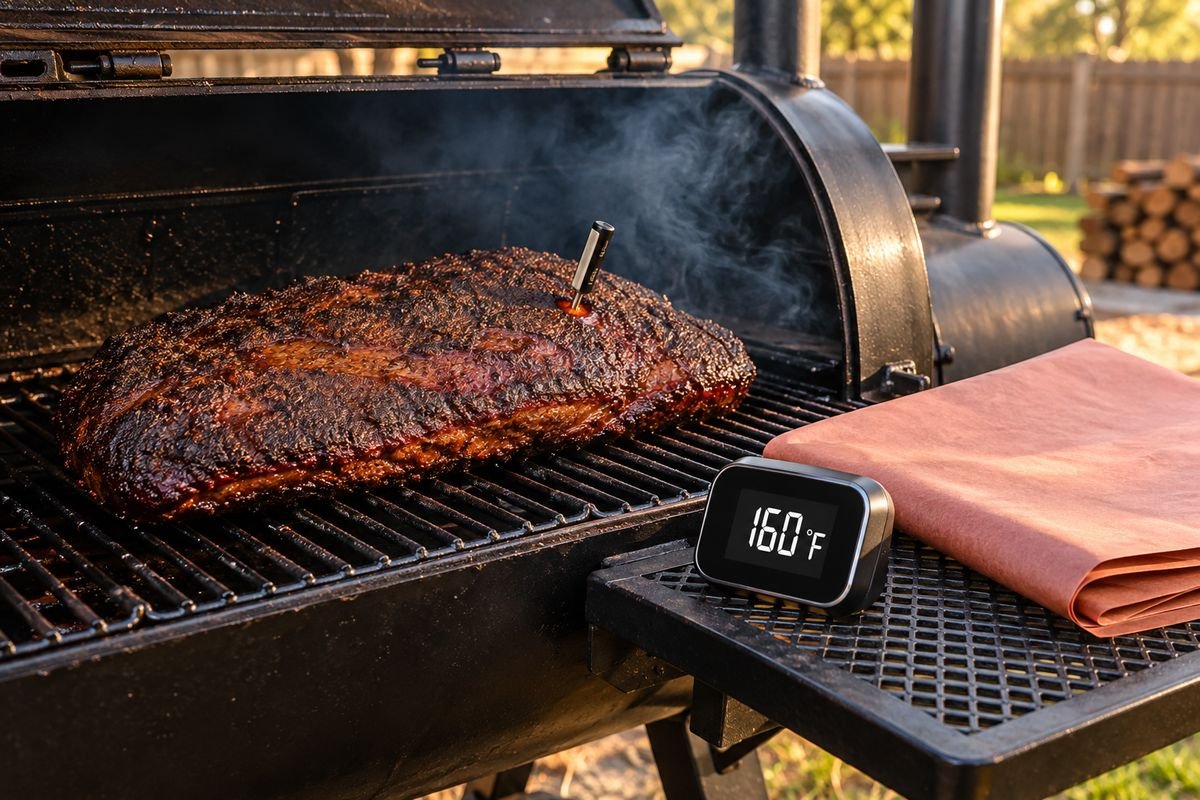
    Brisket in the brisket stall on the smoker with a probe thermometer inserted

    What the brisket stall actually is

    The stall is evaporative cooling, the same physics that cools a person down when sweat evaporates off skin. As the brisket cooks, moisture inside the meat migrates to the surface and evaporates. That evaporation pulls heat away from the meat exactly as fast as the smoker is adding it, so the internal temperature holds flat or even dips slightly for an hour or more. It is not the smoker malfunctioning, it is not the meat "done cooking," and it is not a sign anything went wrong. It is the same reason a wet bulb thermometer reads lower than a dry one.

    The stall is not unique to brisket. Pork shoulder and pork butt hit the same wall for the same reason, just usually with less drama since those cuts are smaller and the plateau passes faster.

    What temperature does brisket stall at?

    The stall most commonly starts somewhere between 150°F and 170°F internal temperature, with 165°F being the single most commonly reported point. The exact number varies by brisket size, trim, humidity in the smoker, and outdoor weather, which is why two briskets cooked back to back can stall at slightly different points. A brisket smoked outdoors on a cold, dry, windy day will often stall earlier and harder than one cooked on a humid day, since dry moving air speeds up evaporation.

    Stage Typical internal temp
    Stall begins 150°F–160°F
    Stall is deepest (flattest reading) 160°F–170°F
    Stall typically breaks 170°F–175°F
    Brisket is done 200°F–205°F

    How long the stall actually lasts

    Every brisket stall runs on its own timeline, which is exactly why guessing by the clock instead of the thermometer causes so much unnecessary panic.

    For a full packer brisket, the stall commonly runs anywhere from 1 to 4 hours, depending on the same variables that affect the temperature it starts at: brisket size, trim, cooker humidity, and outside conditions. A smaller brisket or one cooked in a more humid environment (an insulated cabinet smoker versus an open offset pit, for example) usually pushes through faster than a large packer on a dry, windy day. There is no fixed universal number, which is exactly why so many people panic and think something has gone wrong when their stall runs longer than a number they read somewhere online.

    Three ways to get through the stall

    1. Ride it out

    Doing nothing is a completely valid strategy. Keep the pit temperature steady, keep the lid closed, and let the stall run its course. This produces the best bark of the three options, since the surface stays exposed to smoke and dry heat the entire cook. The tradeoff is time: riding out the stall on a large packer can add hours to an already long cook, which matters if there is a serving deadline.

    2. Wrap it (the Texas Crutch)

    Wrapping the brisket in foil or butcher paper once the stall hits traps the moisture that was evaporating and stops the evaporative cooling effect, which pushes the internal temperature climbing again almost immediately. This is called the Texas Crutch, and it is the most reliable way to control cook time when there is a deadline. The tradeoff is bark: wrapping softens the exterior to some degree, more with foil than with butcher paper.

    3. Raise the pit temperature

    Bumping the smoker's set temperature by 25°F to 50°F once the stall hits gives the meat more heat to work against the evaporative cooling, shortening the stall without wrapping. This preserves bark better than foil wrapping but is less predictable than a full wrap, since it is fighting the same physics rather than removing them.

    Foil vs. butcher paper: which wrap to use

    Comparison Foil Butcher paper
    Middle ground
    No wrap
    Speed through the stall Fastest Fast Slowest
    Bark quality Softest Firmer, closer to unwrapped Best
    Moisture retention Highest Moderate Lowest
    Best for Deadline cooks, tight schedules Bark-focused cooks with some time pressure No time pressure, bark is the priority
    Brisket wrapped for the brisket stall comparing foil and butcher paper wrap

    Foil is sometimes called "the crutch" specifically because it works so well at pushing through the stall fast, but that speed comes at the cost of a softer, sometimes slightly steamed bark. Butcher paper (usually called the "pink wrap" method) is the middle ground: it still blocks most evaporative cooling and speeds the stall through, but it is more breathable than foil, so the bark stays firmer.

    What not to do during the stall

    A brisket stall invites a handful of predictable overreactions, and avoiding them matters more than any active fix.

    Opening the lid repeatedly to check on a stalled brisket is the single most common mistake, and it makes the stall worse, not better. Every time the lid opens, heat and smoke escape and the pit temperature drops, which is the opposite of what is needed to push through evaporative cooling. Trust the thermometer, not the temptation to look.

    Cranking the pit temperature up dramatically (rather than the modest 25°F to 50°F bump described above) is the second most common mistake. A brisket blasted with much higher heat to "force" it through the stall cooks unevenly and risks drying out the exterior before the interior catches up.

    Panicking and wrapping too early, before the stall has actually started, is a smaller but real mistake. Wrapping at 140°F instead of waiting for the actual stall around 150°F to 165°F gives up bark development time that was not actually being lost to a stall yet.

    Why the stall runs longer on some cooks than others

    A handful of variables stack together to make one stall short and another brutal. A larger, thicker packer brisket carries more total moisture to evaporate, so it stalls longer than a smaller flat-only cut. Cold, dry, windy outdoor conditions speed up evaporation at the meat's surface, which paradoxically makes the stall deeper and sometimes longer, not shorter, since more moisture is leaving faster. A smoker running on the low end of a normal cooking range (225°F rather than 275°F) gives the meat less heat to push back against evaporative cooling, which also extends the stall. None of these variables mean anything went wrong; they just explain why the exact same cut can behave differently on two separate cooks.

    What if the brisket never stalls at all?

    Occasionally a brisket climbs straight through the 150°F to 170°F range without any noticeable flattening. This usually happens with a smaller brisket, a smoker running hot, or especially humid ambient conditions that slow evaporation from the start. A brisket that skips the stall is not a problem and does not need to be treated any differently; it simply reaches the 200°F to 205°F done range faster than expected, so it is worth checking doneness earlier than the stall-inclusive time estimates most recipes are built around.

    Regional habits: to wrap or not to wrap

    How a pitmaster handles a brisket stall says as much about regional tradition as it does about the physics involved.

    Central Texas barbecue tradition, built around brisket smoked simply with salt, pepper, and post oak smoke, leans toward little or no wrapping, prioritizing bark above all else and accepting the longer cook time that comes with riding out the stall unwrapped. Competition barbecue circuits, where a specific serving time has to be hit, lean heavily on the Texas Crutch, most often with butcher paper as the compromise that still controls cook time without fully sacrificing bark. Neither approach is more correct than the other; they are optimizing for different things, and the right choice depends on which the cook actually values more for a given day: bark, or a predictable finish time.

    Does the stall happen with other meats?

    Pork shoulder and pork butt stall the same way and for the same reason, typically in a similar 150°F to 170°F range, though the plateau is often shorter given the smaller average size of a pork butt compared to a full packer brisket. Ribs and chicken generally cook through their internal temperature range fast enough, and carry little enough total moisture, that a true multi-hour stall rarely shows up the same way.

    Signs the stall has broken

    Knowing when a brisket stall has actually ended prevents the common mistake of wrapping or cranking heat on a cook that was already about to move again on its own.

    The clearest sign is simply the internal temperature resuming a steady climb after being flat or barely moving for an hour or more. A secondary sign for an unwrapped brisket is the bark visibly setting: it stops looking wet and starts looking dry, dark, and firm to a light touch. Once either sign shows up, the cook proceeds normally through to the 200°F to 205°F done range, whether the brisket is wrapped or not.

    Step by step: what to do when you hit the stall

    1. Confirm it is actually the stall and not a probe or thermometer problem. Check the probe placement (it should sit in the thickest part of the flat, away from fat pockets and away from the grate) before assuming the meat itself has stopped cooking.
    2. Resist the urge to open the lid. Let the smoker do its job for at least 30 to 45 minutes of flat readings before making any change.
    3. Decide which of the three approaches fits the schedule: ride it out for the best bark, wrap for speed, or nudge the pit temperature up for a middle ground.
    4. If wrapping, wrap once and leave it wrapped until the brisket is probing tender near 200°F to 205°F, rather than unwrapping partway through to check bark, which lets heat and moisture escape for no benefit.
    5. Keep monitoring with a reliable probe thermometer rather than relying on time estimates, since the stall's length varies too much cook to cook for a clock-based estimate to be trustworthy. A dedicated leave-in probe removes the temptation to open the lid just to check.

    A reliable thermometer matters more during the stall than any other part of the cook

    Because the stall can run one hour on one cook and four hours on the next, guessing by time instead of by an actual internal temperature reading is the single biggest reason people panic and make one of the mistakes above. A wireless or Bluetooth leave-in probe lets the temperature be checked from a phone without opening the lid at all, which removes the single most common self-inflicted stall problem. See our best wireless meat thermometers for picks that hold up over the length of a full brisket cook, or best meat thermometers for instant-read options for checking doneness once the stall has broken.

    Does wrapping change the flavor?

    Wrapping does not add flavor, but it can mute how concentrated the smoke flavor and bark seasoning taste by comparison, since trapped steam softens the exterior crust where most of that flavor is concentrated. This is a texture and bark effect more than a true flavor loss, which is why pitmasters who care most about bark tend to avoid wrapping, or wrap only in butcher paper rather than foil, and why competition cooks frequently choose butcher paper as the compromise between the two priorities.

    The stall versus a genuinely stalled cook

    A true stall is a flat or barely-moving internal temperature with the pit itself still holding its set temperature normally. If the pit temperature has actually dropped, whether from running low on fuel, a closed air intake, weather, or a pellet auger jam, that is a separate cooking problem, not a brisket stall, and needs its own fix rather than patience. Confirming the pit's own temperature, not just the meat's, is the fastest way to tell the two apart.

    Frequently asked questions

    How long does the brisket stall last?

    Anywhere from 1 to 4 hours on a full packer brisket, depending on brisket size, trim, cooker humidity, and outdoor conditions. There is no fixed universal number, so judge by the thermometer rather than the clock.

    What temperature does brisket stall at?

    Most commonly between 150°F and 165°F internal temperature, though it can start as early as 150°F or hold as late as 170°F depending on conditions.

    Should I wrap my brisket during the stall?

    Wrap in foil if speed matters most, butcher paper if bark matters more but there is still some time pressure, or don't wrap at all if there is no deadline and bark is the top priority. All three are valid approaches used by experienced pitmasters.

    Is it safe to leave a brisket in the stall for hours?

    Yes, as long as the smoker temperature stays in a safe cooking range (typically 225°F to 275°F) the entire time, per USDA minimum safe cooking temperature guidance. The stall is a normal physical process, not a sign the meat is sitting at an unsafe temperature, since the meat's internal temperature during a stall is still well above the food-safety danger zone.