
Table of Contents
Wood choice gets treated like a minor detail compared to temperature control and wrapping, but it shapes more of the final result than most beginners expect. Bark color, smoke ring (the pink layer just under the surface) depth, and whether the meat tastes clean or bitter after twelve hours in the smoker all trace back to which wood went in and how much of it. Some woods that taste great on chicken or ribs turn harsh and overpowering on a cut that spends half a day in the smoke.
This guide covers the best woods by flavor and burn time, the ones to use sparingly or skip, how much wood a typical cook takes, and whether wood choice has anything to do with the stall (the long stretch when the meat temperature stops rising).
What makes a wood good for brisket specifically
Brisket is a different smoking challenge than ribs or chicken because of how long it sits in the smoke. A cut that spends 10 to 16 hours absorbing smoke needs a wood that stays pleasant that whole time, not just for the first hour. Three things separate a good brisket wood from a bad one: it burns clean rather than sooty, its flavor is strong enough to notice but not so aggressive that it turns bitter over a long cook, and it complements beef's own flavor instead of fighting it. Woods that are perfect for a 45-minute cook on chicken thighs can turn acrid and overwhelming by hour eight on a brisket.
The best wood for smoking brisket, ranked
Post oak: the Central Texas standard
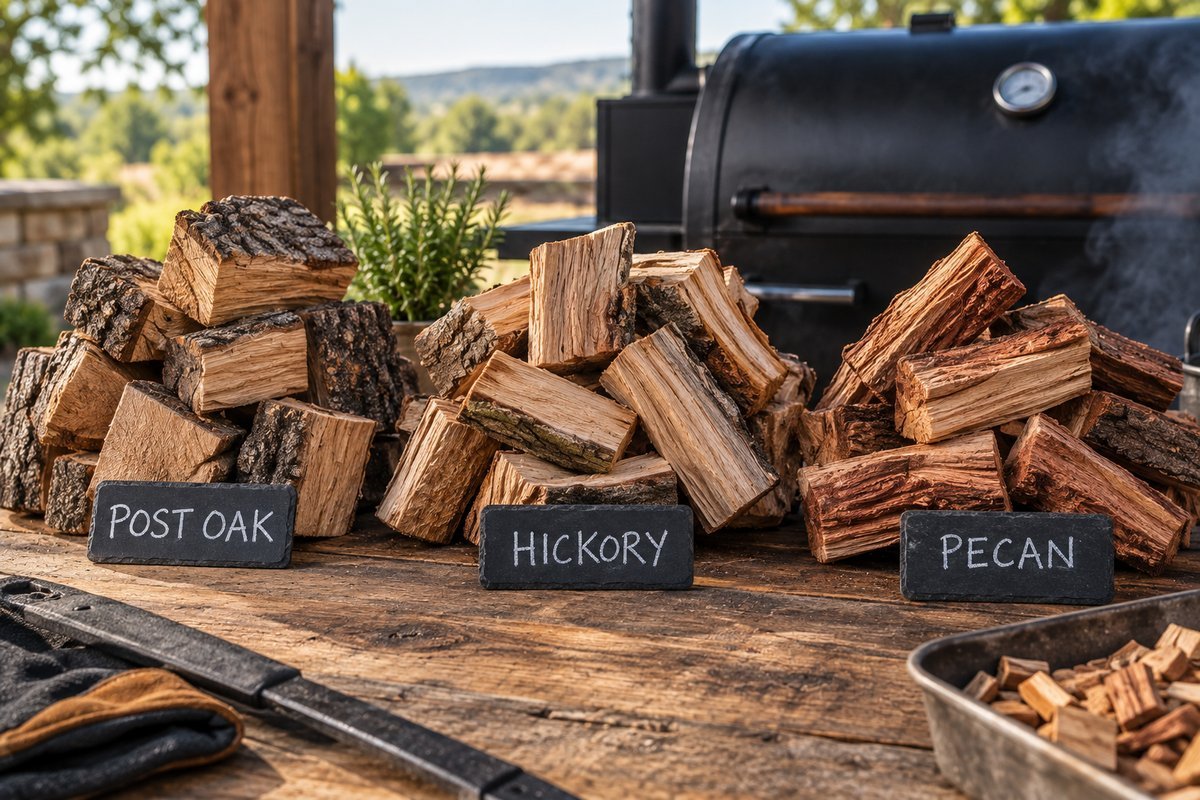
Post oak is what Central Texas barbecue joints have built their reputation on, and for good reason. It burns clean with a medium smoke intensity, produces a straightforward, earthy flavor that complements beef rather than competing with it, and holds up well across a long cook without turning bitter. It's forgiving for beginners because it's hard to oversmoke a brisket with post oak the way it's easy to with something more aggressive. If only one wood is available, this is the one to reach for.
Pecan: mild, sweet, and easy to layer
Pecan brings a mild, nutty sweetness that works well on its own or mixed with a stronger wood like oak or hickory. It won't carry a full cook with the same presence as post oak, but it's an easy way to add complexity without risking bitterness. That makes it a common choice for pitmasters who mix woods rather than smoke on a single type.
Hickory: bold, but best used sparingly on brisket
Hickory alone isn't a good choice for a full brisket cook, but it has a place in the rotation.
Hickory produces a strong, bacon-forward flavor that's a great match for pork but can steamroll a brisket if it's the only wood burning for the entire cook. Many pitmasters use it only for the first hour or two, when the meat is absorbing the most smoke, then switch to a milder wood like post oak or pecan for the rest of the cook. Straight hickory for a full 12-hour brisket risks a bitter, over-smoked bark.
Mesquite: a strong seasoning, not the whole cook
Mesquite has a reputation as "the" Texas wood, but that reputation is more about West Texas grilling and quick cooks than the long, low-and-slow briskets Central Texas is known for. Its smoke is intense, sharp, and resinous, and running a brisket on straight mesquite for 12+ hours tends to build up tannins that turn the bark bitter. Used the way a strong seasoning gets used, a chunk or two at the start of the cook, then switched out for something milder, it adds a distinctive edge without overwhelming the meat.
Cherry, apple, and other fruit woods: mild sweetness and color
Fruit woods like cherry and apple are mild and slightly sweet, and they're prized as much for the deep reddish color they give the bark as for their flavor. On their own they're too subtle to carry a full brisket cook, but mixed with oak or hickory they round out the flavor and add visual appeal without adding bitterness.
Wood comparison at a glance
Should you blend woods?
Blending woods is common and often produces a better result than any single wood. A typical approach pairs a strong wood used briefly (hickory or a little mesquite) with a mild one that carries the rest of the cook (post oak or pecan). This gives the brisket a noticeable smoke character early without risking bitterness by hour ten. There's no single correct blend: post oak with a touch of pecan, or hickory up front followed by oak, are both common combinations. The variable that matters most is total smoke exposure over the full cook, not which exact combination is used.
Chunks, chips, splits, or pellets: which form to buy
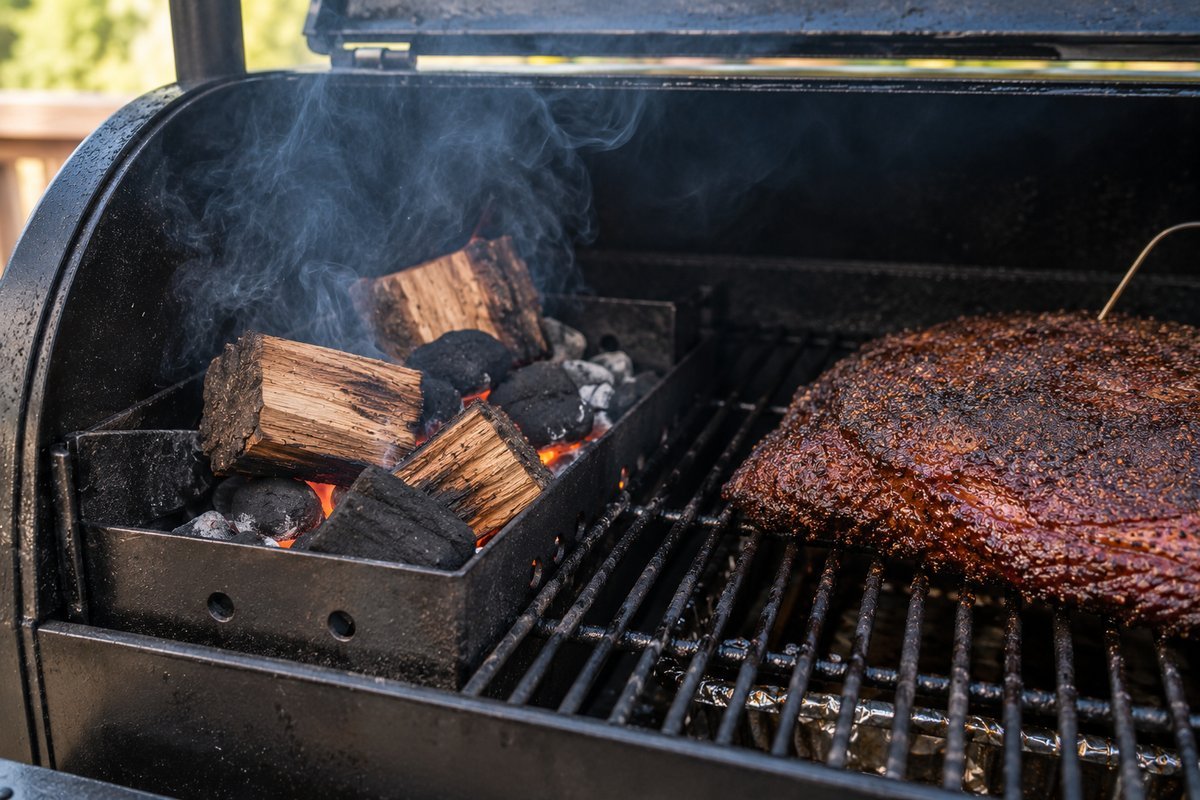
The right form depends on the cooker. Offset smokers (smokers with the firebox on the side) that burn a wood fire use splits (full-size logs) as the primary fuel, sometimes supplemented with chunks. Charcoal smokers (kamado-style, bullet smokers, kettle grills) typically use wood chunks buried in or set on top of the charcoal, since chunks smolder steadily over a long cook without needing constant tending. Chips burn fast and are better suited to shorter cooks or gas grills with a smoker box, since they'd need constant replenishing over a full brisket cook. Pellet smokers, including popular options like Traeger and Pit Boss, use compressed wood pellets as both fuel and smoke source, and pellet blends (post oak, hickory, and a fruit wood mixed together) are common and convenient for brisket specifically.
How much wood does a full brisket cook use
For an offset smoker burning splits as the actual heat source, a full 12-16 hour brisket cook commonly uses somewhere in the range of 15 to 25 splits, depending on the smoker's size, outside temperature, and how efficiently it holds heat. For a charcoal or pellet smoker where wood is just adding smoke flavor rather than serving as the fuel, 4 to 8 fist-sized chunks (or the equivalent in chips added periodically) is a more typical range for the full cook. Adding wood continuously for the entire cook isn't necessary or advisable: see the oversmoking note below.
Woods to avoid, and why
A few woods have no business near a brisket.
Softwoods like pine, cedar, fir, and spruce carry high resin content that produces sooty, bitter smoke and can leave an unpleasant chemical aftertaste on the meat. Elm and redwood have similar issues with excess sap and pungent-smelling smoke. Treated or painted lumber should never go anywhere near a smoker. It can carry chemical preservatives that turn toxic when burned. Green or wet wood (freshly cut, not properly seasoned and dried) burns cooler and smokier than seasoned wood, producing excess creosote (a bitter, sooty residue from dirty smoke) that soaks into the meat and tastes acrid rather than smoky. Moldy or visibly rotten wood should be discarded outright rather than burned. If a piece of wood's origin isn't known for certain, it's not worth the risk of guessing.
How to tell if wood is properly seasoned
Freshly cut ("green") wood still holds a lot of internal moisture, and burning it produces exactly the thick, acrid smoke described above. Properly seasoned (dried for months so it burns clean) wood should sit at roughly 20% moisture content or less, and a few simple checks make that easy to judge without special equipment. Seasoned splits usually show deep radial cracks at the cut ends, feel noticeably lighter than a green piece of the same size, and produce a sharp, ringing sound when two pieces are knocked together rather than a dull thud. A cheap wood moisture meter, pressed into a freshly split face, is the most reliable way to confirm it, per University of New Hampshire Extension's firewood seasoning guidance. Most hardwoods used for smoking need at least 6 to 12 months of proper seasoning (stacked off the ground, covered on top, open on the sides for airflow) before they're ready to burn clean.
Does wood choice affect the stall or cook time?
Wood type has no meaningful effect on the brisket stall itself. That's driven by evaporative cooling as moisture leaves the meat's surface, and it happens regardless of which wood is burning. What wood choice does affect is bark flavor and color by the time the brisket reaches the stall and beyond. A brisket run on straight hickory or mesquite for the first several hours can already taste noticeably different, and more bitter if oversmoked, by the time it hits the stall around 150°F to 170°F internal temperature, compared to one run on post oak the whole way.
Regional wood traditions
The preferred wood often comes down to where the pitmaster learned to cook.
Central Texas barbecue, built around salt, pepper, and smoke rather than heavy sauce or rubs, leans almost entirely on post oak, prizing a clean, beef-forward flavor that doesn't compete with the meat. Kansas City barbecue, which sauces more and smokes a wider variety of meats, uses hickory more heavily alongside fruit woods. Memphis and Carolina traditions, more focused on pork than brisket, also lean on hickory. Competition barbecue circuits often blend woods deliberately, since judges are tasting a small bite rather than a full portion. A slightly stronger, more complex smoke profile can stand out better in that context than it would across an entire brisket eaten at home.
Choosing brisket wood is mostly about matching intensity to cook length, not chasing an exotic species.
Signs you've oversmoked a brisket
Too much smoke ruins a brisket just as fast as too little.
A bitter, almost ashy aftertaste on the bark is the clearest sign, often paired with a bark that looks unusually dark or black rather than a deep mahogany color. A metallic or acrid taste, rather than a smoky one, usually points to creosote from green wood, too much wood added at once, or poor airflow letting thick white smoke build up instead of the thin, nearly-clear blue smoke a well-managed fire produces. Thin blue smoke, not a thick white cloud, is the target throughout the cook.
Wood choice affects burn time but not the stall itself. See our guide to the brisket stall for what causes it and how to push through.
Frequently asked questions
What is the best all-around wood for smoking brisket?
Post oak. It's the traditional Central Texas choice: clean-burning, medium smoke intensity, and forgiving enough that it's hard to oversmoke a brisket with it, even across a full 12-16 hour cook.
Is mesquite good for smoking a whole brisket?
Not for the entire cook. Mesquite's smoke is intense and can turn bitter and tannic if it's the only wood burning for 12+ hours. It works best as a small addition early in the cook, not as the primary wood throughout.
Can you mix different types of wood when smoking brisket?
Yes, and many experienced pitmasters do. A common approach pairs a stronger wood (hickory or a little mesquite) used early in the cook with a milder wood (post oak or pecan) that carries it through.
How much wood do I need for a full brisket cook?
On an offset smoker burning splits as fuel, roughly 15 to 25 splits for a full 12-16 hour cook. On a charcoal or pellet smoker where wood is just for flavor, 4 to 8 chunks (or the chip equivalent) is more typical.
How do I know if my smoking wood is dry enough to use?
Check for deep cracks at the cut ends, noticeably lighter weight than a green piece of the same size, and a sharp ringing sound (rather than a dull thud) when you knock two pieces together. A wood moisture meter reading of 20% or less is the most reliable confirmation.